Ella Fitzgerald was known as “the First Lady of Song” for a reason. Her way with a lyric was impeccable, her delivery making the listener discover nuances in even the most well-known standard (her versions of the Cole Porter songbook are for me the best of both worlds: Ella at her best and Porter rendered superlatively). And her improvisational ability – her famed scatting – was likewise incomparable. One of the interesting moments in the show Ella the Musical, currently playing at the Long Wharf, is when she hits upon scat as a way to counteract the charge that her precise diction makes her sound “too white.” Indeed, the best aspects of the show are such moments that recreated the feel of a performer’s life, trying to cope with what “the audience wants.”
In the first half of the show Ella (Tina Fabrique) is rehearsing with her band and speaks to us, the audience, as though we’re her confidantes as she, a very private person, tries to wrestle with her manager’s idea that she provide some revealing “patter” as part of her performance. In the second half we’re treated to a ficitonalized dramatization of a show Ella played in Nice shortly after the death of her half-sister whose child Ella had raised, though with much absenteeism, as her own.
There was some dramatic tension in going from “insiders” at the backstage session to a generalized audience treated to the professional stage Ella. What didn’t work, for me, was the dualism of the vulnerable and forthright Ella of the first half and the more vapidly entertaining Ella of the second half. And when she had to breakdown and cry on stage it felt to me like a betrayal of the controlled and personally self-effacing Ella we got to know in the first half. In other words, the breakdown seemed like “show biz” though ostensibly it wasn’t meant to be.
But that’s just me quibbling about the script. And the script is incidental to what makes this a great show to go to. It’s the music – provided by George Caldwell (piano), Rodney Harper (drums), Ron Haynes (trumpet), Cliff Kellam (bass) and the full-throated vocals, with feeling, style and, yes, swing delivered by Fabrique. When Ella teases early on with “A-Tisket, A-Tasket” and doesn’t do it (“haven’t I done that enough”), I didn’t mind – as with most signature songs I found myself wondering why that was the tune synonymous with her name. For me, the show-stopper was “The Man That I Love,” but then I'm a jazz ballad aficionado. And don’t worry: Fabrique as Ella on stage does the great lady's most famous song with all the exuberance you’d expect.
And about that band: not only did they provide great support, turning the Mainstage into a hot jazz club, but they also interacted very effectively with Ella’s story, as for instance, Harper playing Ella’s first manager and band leader, Chick Webb, or Kellam as Ella’s supportive husband, or Haynes’ Satchmo imitation for a sparkling Ella / Armstrong duet in the second half.
“It don’t mean a thing if ain’t got that swing” Ella sings at the beginning of the show, and, musically, this show means all it needs to. If the drama didn’t always swing it, it at least let us in on the trials faced by even a consummate professional like Ella, for whom hitting the right musical note was never an issue, but the right note as a public personality might be a bit more hit or miss.
Ella the Musical; book by Jeffrey Hatcher; conceived by Rob Ruggiero and Dyke Garrison; directed by Rob Ruggiero; music direction by George Caldwell; music supervision and arrangements by Danny Holgate
Long Wharf Theatre, Sept. 22-Oct. 17
for my review of Crumbs, the current Yale Cabaret show, go to: http://www.newhavenadvocate.com/culture-vulture/crumbs-and-clues
 Director Devin Brain and the cast of the current Yale Summer Cabaret show, The Phoenix, have given themselves quite a task: to render a situation that could be either fantasy or reality, when either is potentially alienating. Based on a haunting story by best-selling Australian author Isobelle Carmody, the play has been derived by the cast via an improvisational process of discovery, which means that the presentation is not scripted so much as agreed upon through trial and error during a long period of gestation.
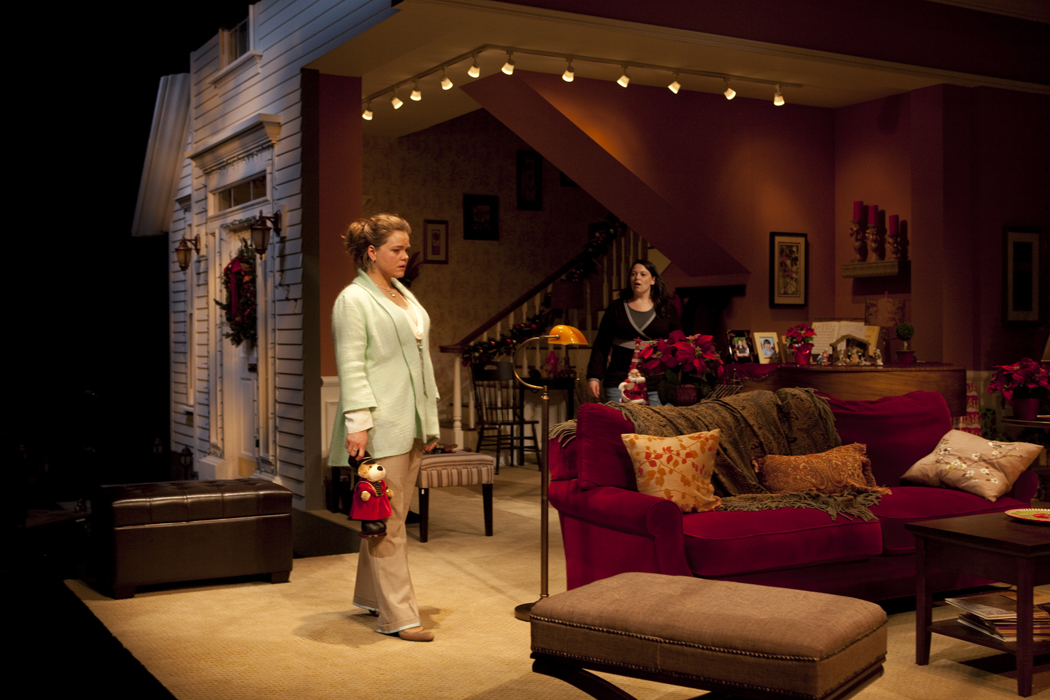 The Long Wharf Theatre production of Henrik Ibsen's A Doll's House managed a surprising feat: it made the play more entertaining without significantly altering it. If you're a purist who wants to see Ibsen played straight, it does that; but if you think that a play like ADH, with its winsome wifey who gets into some hot water due to an "innocent" forgery, then gets out of it only to slam the door on her happy-ever-after home, is a bit dated and could use some kind of make-over, well, this show does that too.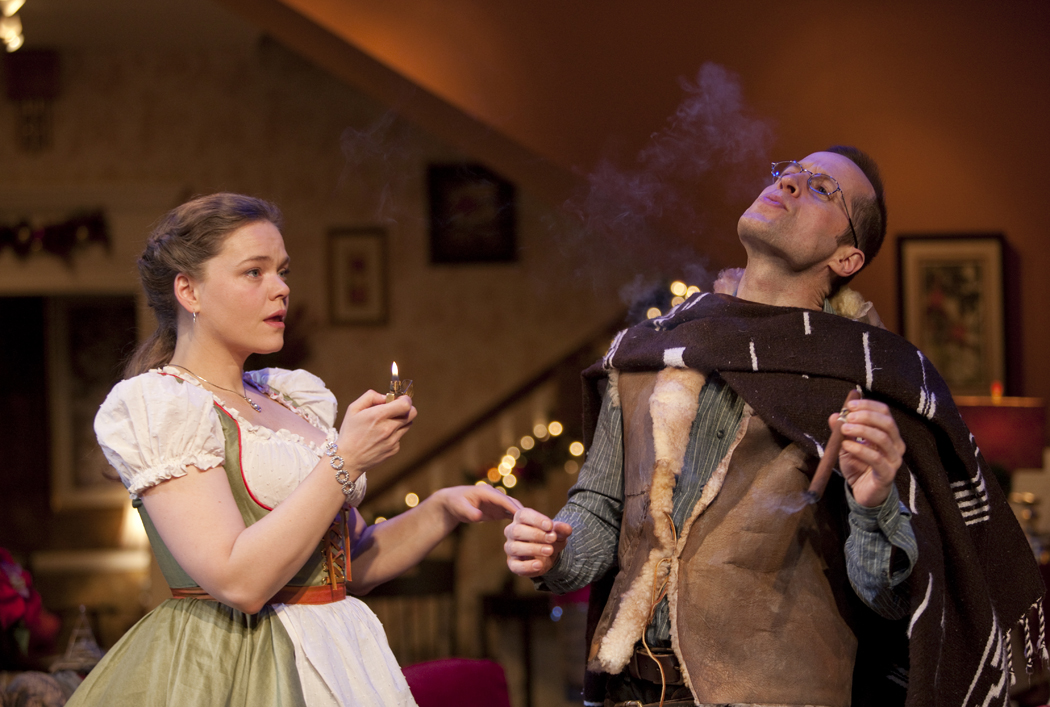
 “Art” by Yasmina Reza first appeared in Paris in 1995. Shortly afterwards it was translated into English for the British stage and turned up at the Royale Theatre (now the Bernard B. Jacobs Theatre) on Broadway on March 1, 1998. The cast was stellar for this three-person play, performed without intermission. The six-month Broadway run included Alan Alda, Victor Garber, and Alfred Molina, all well known film and theatre performers.
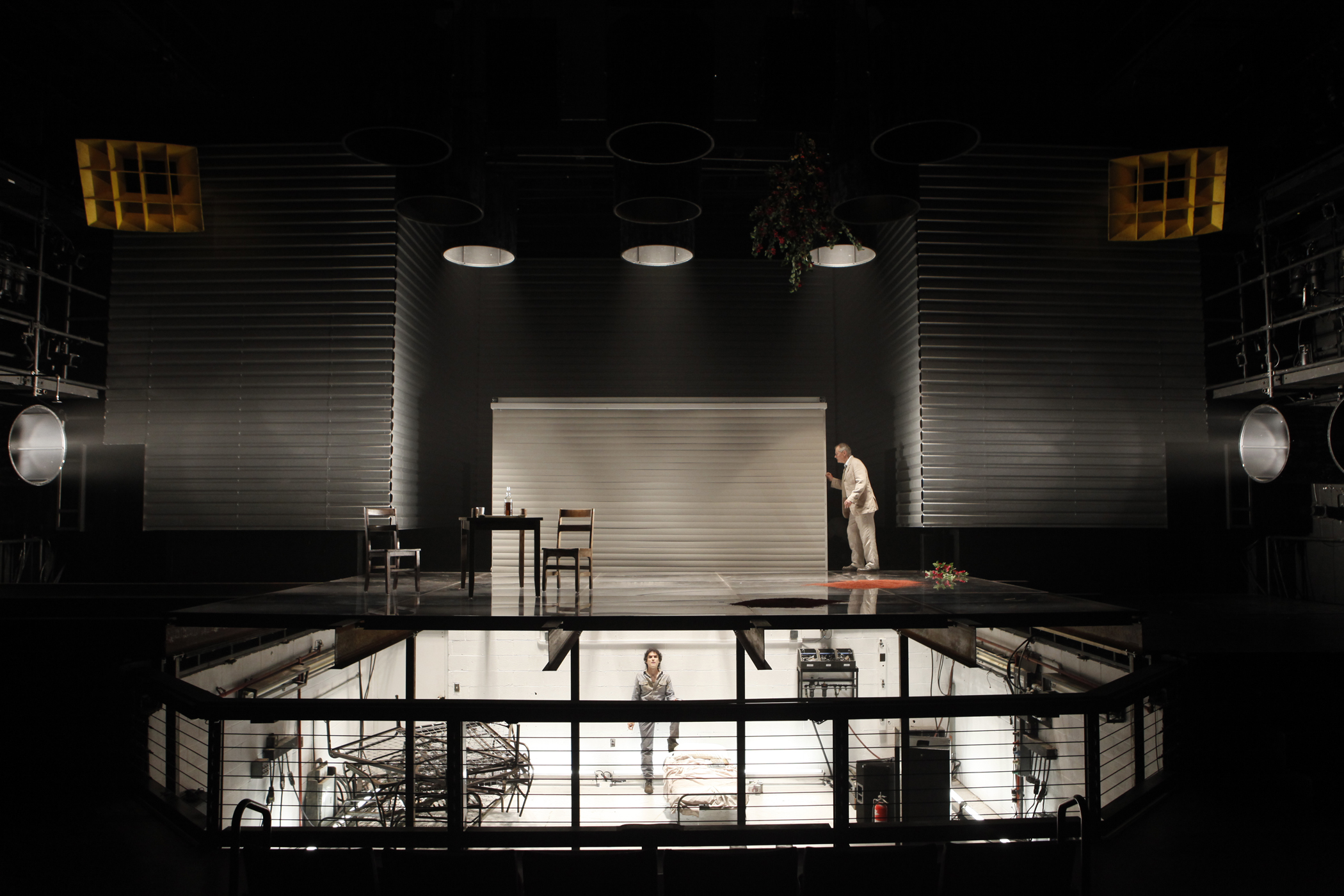 Bernard-Marie Koltès' Battle of Black and Dogs (Combat de nègre et de chiens), translated by Michaël Attias, and directed by Robert Woodruff, is the second play this season at the Yale Rep to take us to vague environs in Africa to witness a drama among a small group of people cut off from the world at large. Like Danai Gurira's Eclipsed, BBD places us in a compound, but this time it's a "construction site run by a foreign company in a West African country, anywhere from Senegal to Nigeria," where the main characters, white and French, are confronted by Alboury (Albert Jones), a member of a local Wolof tribe who wants to retrieve the body of a worker at the site who has recently died or been killed.
 Review of