The reality is that not everyone can be a doctor, not everyone can be a professional athlete, and not everyone can be a writer. You may be a precious snowflake, but if you can’t express your individuality in sterling prose, I don’t want to read about it.–Ted Genoways, "The Death of Fiction?" in Mother Jones Jan/Feb 2010
Here Ted Genoways, editor of The Virginia Quarterly Review, expresses his mission statement, so to speak, a way of turning aside submissions he simply doesn't want or have time to read. We might ask ourselves if this, in itself, is "sterling prose," and wonder why we should read it if it's not. Two matters make this less than "sterling," in my view, and I'd like to point them out as a means to talk about what we talk about when we talk about writing.
One problem is the speciousness of the analogies: a doctor becomes a doctor by going through considerable training and vetting; an athlete -- which is something "anyone" can be -- only becomes a professional athlete by getting paid, and continuing to get paid, to play a sport. The "anyone" here, to be an athlete, is anyone who puts in the time to train, has talent, drive, and what is generically called "athletic ability." Granted, some may wish they had it, but really don't. It's assumed that everyone who is a professional athlete has some ability -- though their detractors and anti-fans may deny it vehemently.
Is writing really like either of these things? Not really, and here's why. Anyone, literally, can be a writer, so long as he or she is literate. Children are encouraged to be athletic but they don't fail school if they aren't (I know whereof I speak on this one). But they really aren't supposed to graduate without being able to write. Therefore, they are writers, potentially.
Genoways doesn't say "professional writer" because he knows that wouldn't help his argument. The pay scale for poetry and much literary writing is so low that people who are professional writers -- journalists, mostly, but also celebrities who write books, or who become celebrities by writing books -- would hesitate to call them professionals. And everyone who considers him or herself a literary writer knows this. Many, possibly most, are not trying to become "professional writers" in that sense. Certainly, most want to be published writers and most would like to be paid for their writing, and would like to sell their books, but many of the people submitting to literary journals are "amateurs" if we define "professional" as "getting paid to write." Many literary figures, some quite respected, make their livings by something other than writing.
Genoways is well aware of this and so the "professional athlete" analogy really doesn't work, but he wants to differentiate between sheer ability or doing it for love of the game, and being an athlete paid to compete. But pay isn't really the issue when it comes to writing, even if VQR pays. If it were they'd only accept submissions from agents, who are getting paid to make sure their authors make money.
The doctor analogy doesn't work at all, not even really for academic writers, who also don't get paid (much or always) for their writing, though they are expected to produce it. Not everyone can become a Ph.D.,we might say, but, if you do become one, you now have a credential that gives you authority to conduct research and comment on research in that field. You may or may not get paid for that; as with many writers, your real pay, what makes you professional, comes from teaching. A doctor, generally, gets paid for practicing medicine, making him, maybe, a bit like the freelance writer, but one rarely hears of someone being a doctor "on the side."
Getting paid for writing may be difficult, in part, because anyone can be a writer. And though Genoways might like to think that being an editor for a respected journal is comparable to those who hand out degrees in medicine or those who hire athletes, it isn't really. An editor of such a journal is given the task of deciding, from all that it is submitted and solicited, what suits the journal, what fits with what. Some of that may come from people with credentials, some of it not. Some from students in MFA programs, some from their teachers, some from people who wouldn't go near such a thing. Or it may come only from whomever the editor knows and is in contact with.
If not published by VQR, the writing might still find a home somewhere, and if published somewhere, it may claim some at least minimal credit as published. And that's really the only point in Genoways' prose that stands: his statement of his own tastes as an editor. If it's not sterling prose, don't send it, he's not interested. Someone else may be. And so, while the person Genoways rejects is, in his scheme of things, not a writer, it may be that the person really is, and maybe even a professional one.
So what of Genoways' prose? Do you not find that bit about the "precious snowflake" cloying? Does anyone really want to read writers who are considered or consider themselves precious snowflakes? Genoways goes for the cheap laugh -- oh, yes, Ted, we know that type, how rough it must be to read such poseurs.
But then he doesn't say (which would make me be with him more): if you cannot write sterling prose, I don't want to read you. Fine. But no, he says "if you cannot express your individuality in sterling prose," which gives the game away: "express your individuality" is not sterling prose (at this point, I think "sterling prose" is rather less than sterling), but seems a concession to the language of that "precious snowflake." But why? To say that the "sterling" expression of individuality will trump the "precious" expression of individuality? If so, it leads us to believe that the expression of individuality is what Genoways is after, when the point he seems most passionate about is decrying the protracted navel-gazing of American fiction writers who don't seem to know or care that there's a war or a world or a world war going on.
If Genoways, as editor, were reading Genoways' essay, well, let's just say it might not make the cut.

 Meyer Levin, a writer best-known for his novel Compulsion, the story of the Leopold-Loeb murder and trial, wanted to be known as the man who wrote a play based on the diary of Anne Frank. He met with Otto Frank to discuss that possibility before Anne’s book had even been published in the U.S.
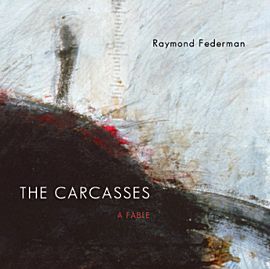
 Reading Charlotte Garrett Currier’s Shadow and Light: A Retrospective left me conflicted: Had Ijust finished a book of poetry or listened to a Charles Auguste De Beriot movement? Currier incontestably has a vigilant ear for the metrical line unit, creating impeccable rhythms, balancing the traditional formalities of meter and rhyme scheme. Her work is a unique, eye-pleasing integration of extant linguistic idiosyncrasies with avant-garde typography. Perhaps it is fortuitous that I do not have to answer my question of whether Currier writes poetry or composes music. As Dylan Thomas once offered, “Poetry is what makes me laugh or cry or yawn, what makes my toenails twinkle, what makes me want to do this or that or nothing.” At heart, the intent of poetry is to make the audience feel, and feel deeply, and Currier, through this highly metrical almost-memoir, certainly reminds us what it is to wholly feel—whether we wish to be so reminded or not.