Steven Dietz's Private Eyes is a playful play. We're never quite sure what we're watching. Sure, it's a play, and we accept that plays are supposed to be a likeness of reality. A stage with a desk and a round table and a few chairs can be a space where a woman (Rebecka Jones) tries out for a part with a man (Philip M. Gardiner) who seems to be a director; when later the woman, Lisa, working as a waitress, finds the director, Matthew, at her table, we accept, for the sake of make believe, that the action has moved to a restaurant. And that's what lets Dietz produce his "gotcha" effect: they both are still on stage, we find, and both scenes, the try out and the restaurant, are part of a rehearsal, and the two are married, and in a play being directed by Adrian (Robert Resnikoff). Scenes that seem like they're happening in real life -- Lisa and Adrian debate how to reveal to Matthew that they have been having an affair -- turn out to be a narrative Matthew is telling to his therapist Frank (Jackie Sidle). At any moment what is real, what is staged, what is fantasized is in question and sometimes the switches from one "level" to another and back are lightning fast and quite comical. For instance, Adrian and Lisa are cuddling in bed when suddenly Adrian speaks offstage to Matthew telling him that's how he'd like him to play the bed scene -- the bed is literally on stage of course but at that moment we realize it's actually on stage and that Matthew has walked into the scene.
It might sound like the play is about play acting, about how to represent plausible reality on stage and how to keep breaking through the fourth wall, playing on the audience's willing acceptance of staged activity as actual behavior. But the play has more to offer than that. The theatrical sleights of hand keep us off-guard and laughing; meanwhile, we're witnessing how staging scenes -- of seduction, of concealment, of confrontation, of confession -- is a part of the theatricality of everyday life.
Like sociologist Erving Goffman's study The Presentation of Self in Everyday Life, Dietz's play accepts that human interactions always contain an element of performance. In a sense, we never get to the bottom of these characters because they, like us, are always in a play.
The performance style of contemporary theater is key to making the shifting levels effective: roles requiring minimal costume change, staged with minimal props and sets, vocal deliveries that stress a declamatory approach to speech -- as if people don't converse so much as aim monologues at each other or try to use verbal cues as a means to assert themselves -- all add up to an open-ended performance that is "like" life only because we accept such theatrical conventions as true to reality, which of course they aren't.
In a way, it seems that Dietz's play is questioning those conventions, but if so, not in any very critical way. As played by Theatre 4, the play was mainly good fun -- Gardiner in particular made the most of his character's comical state of knowing and not knowing what was going on. And Mariah Sage, as supposedly a detective tailing Adrian at his wife's request, added some unexpected and racy fun to Matthew's life. Jones had the task of generating sympathy for a cheater and managed it by suggesting the dramatic thrill of secrecy and the fact that, in theater and in life, we mainly want something to happen.
Steven Dietz's Private Eyes, directed by Janie Tomarkin for Theatre 4, plays June 4 & 5 at Oddfellows Playhouse in Middletown, 203.654.7111, $20 suggested price; and June 10-13, at The Kate in Old Saybrook, 877.503.1286, tickets $32. For more information: www.t4ct.com.
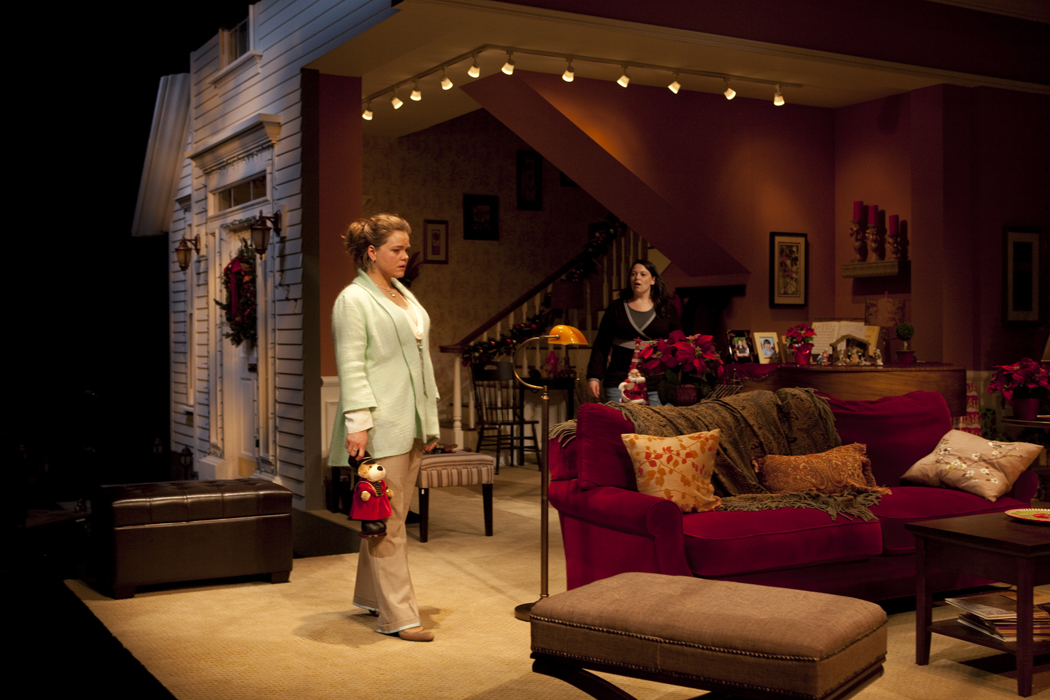 The Long Wharf Theatre production of Henrik Ibsen's A Doll's House managed a surprising feat: it made the play more entertaining without significantly altering it. If you're a purist who wants to see Ibsen played straight, it does that; but if you think that a play like ADH, with its winsome wifey who gets into some hot water due to an "innocent" forgery, then gets out of it only to slam the door on her happy-ever-after home, is a bit dated and could use some kind of make-over, well, this show does that too.
 “Art” by Yasmina Reza first appeared in Paris in 1995. Shortly afterwards it was translated into English for the British stage and turned up at the Royale Theatre (now the Bernard B. Jacobs Theatre) on Broadway on March 1, 1998. The cast was stellar for this three-person play, performed without intermission. The six-month Broadway run included Alan Alda, Victor Garber, and Alfred Molina, all well known film and theatre performers.
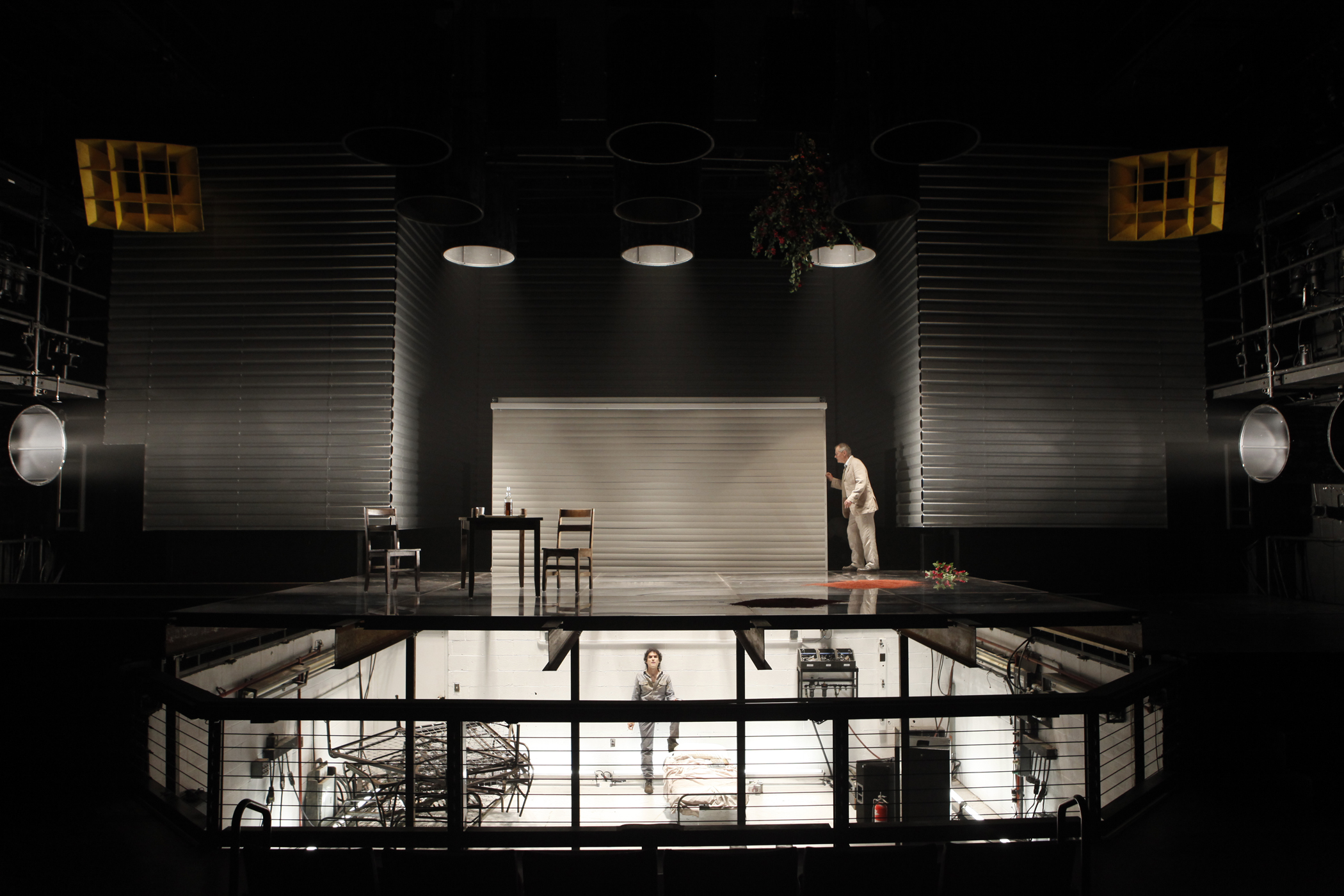 Bernard-Marie Koltès' Battle of Black and Dogs (Combat de nègre et de chiens), translated by Michaël Attias, and directed by Robert Woodruff, is the second play this season at the Yale Rep to take us to vague environs in Africa to witness a drama among a small group of people cut off from the world at large. Like Danai Gurira's Eclipsed, BBD places us in a compound, but this time it's a "construction site run by a foreign company in a West African country, anywhere from Senegal to Nigeria," where the main characters, white and French, are confronted by Alboury (Albert Jones), a member of a local Wolof tribe who wants to retrieve the body of a worker at the site who has recently died or been killed.
 Review of