While schmoozing in the home ofNew Haven Review editor Mark Oppenheimer, we started speaking of our respective experiences as college instructors. He noted how much he preferred teaching nonfiction writing to literature because he neither wrote nor knew all that much about literary criticism—a gross understatement on his part, really. I chimed in, stupidly perhaps, "I don't really understand why we teach students how to write literary criticism at all."
But is such a sentiment all that stupid? In spirit of making a go of this bit of devil's advocacy, I boldly ask: why do we teach students how to write literary criticism? Make no mistake, it is a type of writing that can approach the status of art in the right hands. But even for experts it is a far more difficult form of nonfiction to produce—in my humble view—than those ol' classroom chestnuts: narration, description, and argumentation.
Now, technically, literary criticism is a subdivision of the last, but it remains one of the hardest to do well. I attribute this difficulty not only to the inability of students to read and write well but to the inherent complexity of trying to formulate an argument about something as slippery as a well-wrought story or poem.
In my experience, the slipperiness of the literary artifact comes directly from the story-like nature of this species of discourse. So when I taught the art of lit crit—and probably not all that well, to be honest—my students continuously wrestled with the Herculean (or rather Sisyphean) task of unwinding authors from their characters, storytellers from their stories, the telling from the showing. Even I still have difficulty with the boxes-within-boxes or hall-of-mirrors (pick your metaphor) nature of this discursive mode. And, mind you, I have a doctorate in literature.
I'm currently convinced that high school teachers and college professors teach students how to write literary criticism not because it instructs them in how to "think critically" or "formulate an argument" better. These can be done just as easily—actually more easily—focusing on more concrete topics, like reproductive rights or drunk-driving laws. Instead, I hold that many teachers, in their heart of hearts, would rather not teach students how to write literary criticism at all. What they'd prefer is reading works of literary quality and talking about them intelligently—like a book club but with the teacher's authority intact for guiding novitiates. That certainly was my experience as a college instructor.
I loved selecting, teaching, and discussing (or more appropriately discoursing on) the work at hand. What I despised to no end was marking my students' papers, which were poorly written, generally incoherent, and pretty pedestrian in their analyses. And most literary instructors I speak with echo this sentiment—although I'm happy to be flamed to the contrary.
Marking papers probably explains why I became a professional editor: I grew tired of commenting on people's dry runs. If someone is going to write poorly, and I'm going to have to redline it into readable prose, I might as well make sure the fruits of my labor see light of day in published form.
On occasion, I do yearn for those halcyon days teaching a great short story, a fine novel, or shockingly brilliant poem. I even sometimes miss the stress and strain of writing literary criticism—no easy task, even for me. But the idea of teaching students to write literary criticism, as if that constituted training for something other than, well, writing literary criticism—heck, lit crit isn't even a solid basis for the art of book reviewing—is a misbegotten notion that serves no one other than the instructors who recognize this chore as the price they must pay for the pleasures of reading and discussing literature worth talking about.

 Meyer Levin, a writer best-known for his novel Compulsion, the story of the Leopold-Loeb murder and trial, wanted to be known as the man who wrote a play based on the diary of Anne Frank. He met with Otto Frank to discuss that possibility before Anne’s book had even been published in the U.S.
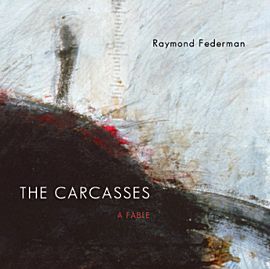
 Reading Charlotte Garrett Currier’s Shadow and Light: A Retrospective left me conflicted: Had Ijust finished a book of poetry or listened to a Charles Auguste De Beriot movement? Currier incontestably has a vigilant ear for the metrical line unit, creating impeccable rhythms, balancing the traditional formalities of meter and rhyme scheme. Her work is a unique, eye-pleasing integration of extant linguistic idiosyncrasies with avant-garde typography. Perhaps it is fortuitous that I do not have to answer my question of whether Currier writes poetry or composes music. As Dylan Thomas once offered, “Poetry is what makes me laugh or cry or yawn, what makes my toenails twinkle, what makes me want to do this or that or nothing.” At heart, the intent of poetry is to make the audience feel, and feel deeply, and Currier, through this highly metrical almost-memoir, certainly reminds us what it is to wholly feel—whether we wish to be so reminded or not.