Attention Paid

Review of Death of a Salesman, Hartford Stage

Hartford Stage has outdone itself this time! While the 60+ year-old playhouse is well known for reviving classic American plays, there are classics and then there are classics. Arthur Miller's Death of a Salesman, which dates from 1949, has the kind of cred and rep that are pretty much unshakeable. While certain elements to any play that old may seem dated, at this point the datedness is part of its power: we've always been aware that Miller was documenting a vanishing breed as well as looking askance at the predatory laws of the business jungle. His Willy Loman is a testament to a belief in "the little guy," while insisting that how the average working person fares, so fares the country. The loneliness of the long-distance salesman could never be so lonely now, in our world of interconnectedness via mobile phone and computer, so that revisiting that world—a past almost as mythic as the Greek tragedies Miller deliberately evokes—makes the two to three hour business of our stage feel grander and more archetypal than ever.

Biff (Samuel H. Levin), Willy (Peter Jacobson), Uncle Ben (Michael Cullen) in Death of a Salesman, directed by Melia Bensussen, Hartford Stage; photo by T. Charles Erickson

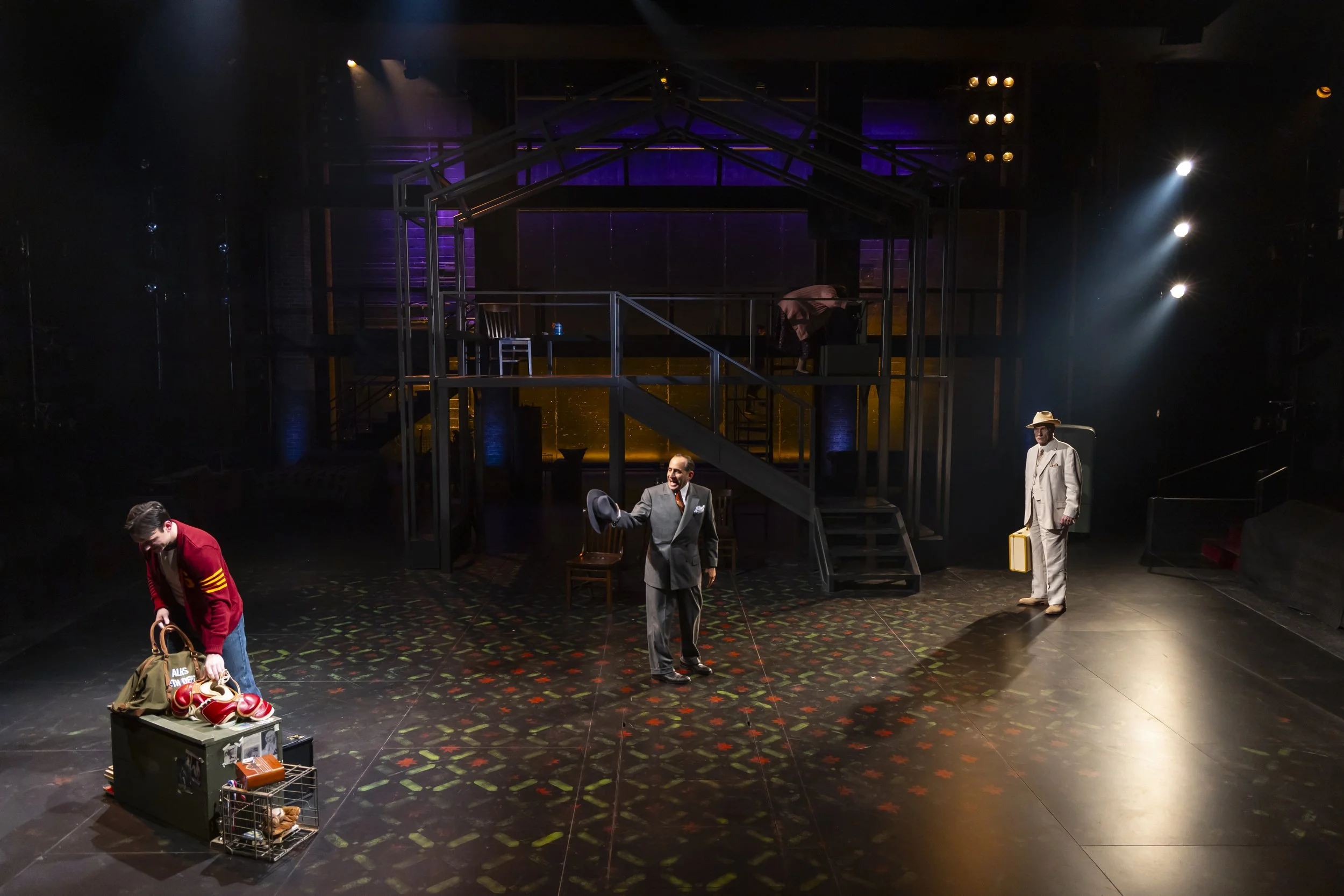
It's to the credit of Melia Bensussen, director of this production, and Artistic Director of Hartford Stage, that the pacing of the production is so incredibly deft. The casting is superb, and the tech—as we've come to assume at Hartford Stage—top notch. Miller, as the playbill reminds us, imagined his play as taking place in Willy Loman's mind, so the playing space has to shift and change with the action. Sara Brown's versatile set, paired down to essential furniture and scaffolding, with amazingly evocative lighting by Matthew Richards, allows for movement in the foreground and the background as well as providing a completely surrounded feeling. The space can be open and distancing and at times surprisingly claustrophobic, so intensely do the actors manifest the differences in setting (greatly assisted by Darron L. West's sensitive and evocative sound design and music). Each scene runs flawlessly into the next, creating a compelling cumulative feel that attests to why it's so important to see an actor live out such a role fully, relentlessly.

Biff (Samuel H. Levine), Willy (Peter Jacobson), Happy (Max Katz) in Death of a Salesman, directed by Melia Bensussen, Hartford Stage; photo by T. Charles Erickson

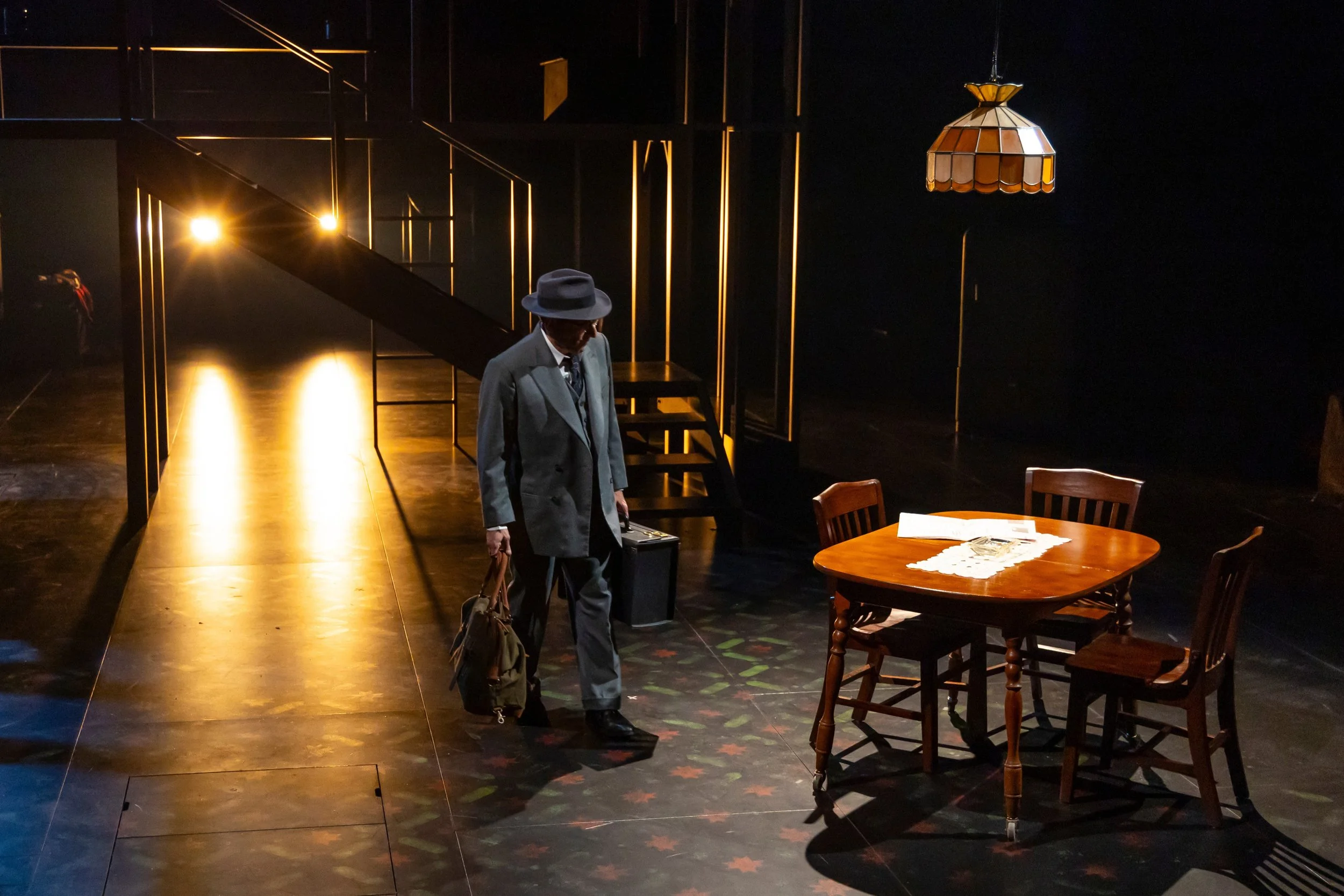
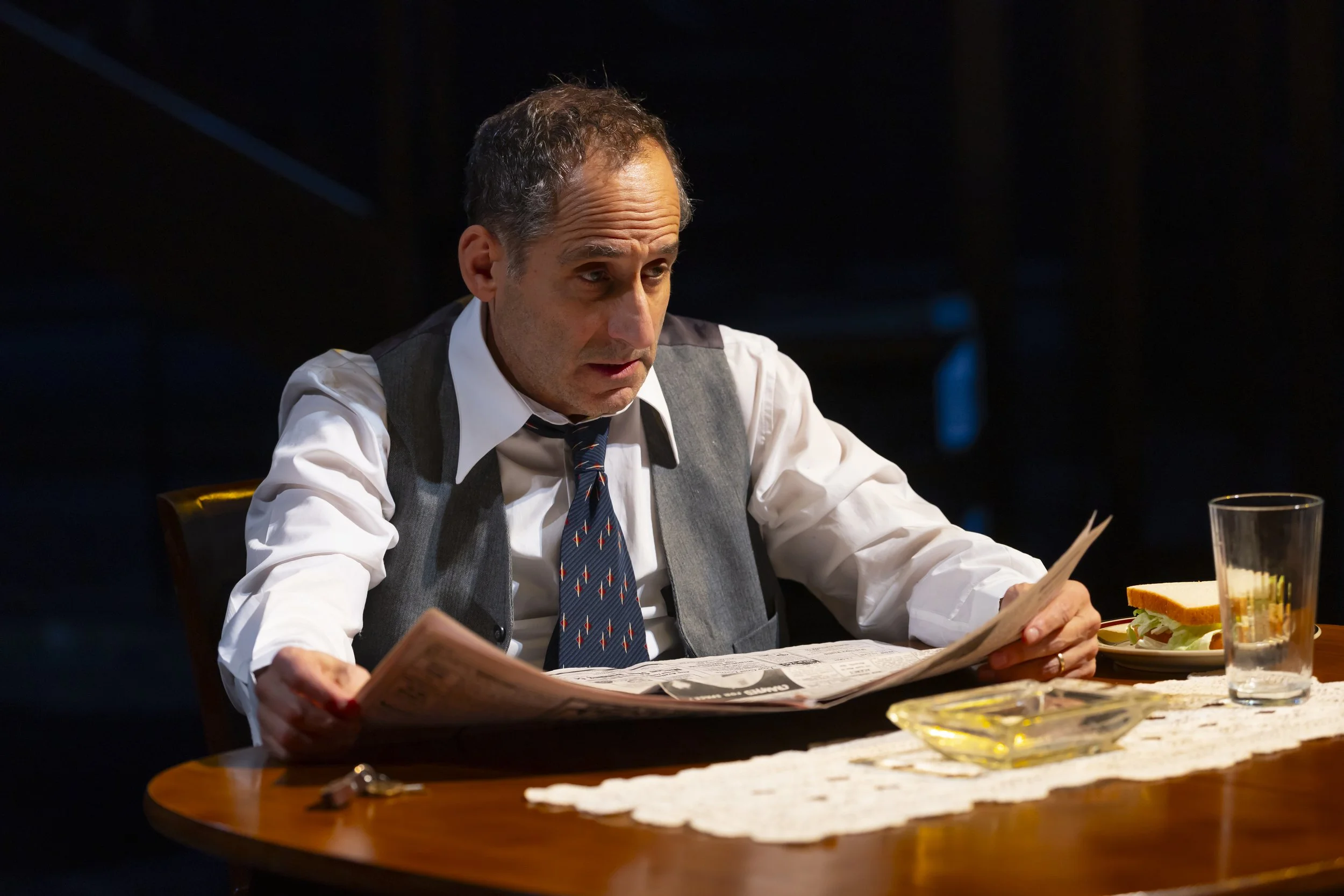
Peter Jacobson's Willy Loman looks and sounds exactly right, which occurred to my mind as "a Jewish Spencer Tracy." The "Tracy aspect" means there is an essential trustworthy, right-minded, homey comfortableness in Willy, and also the kind of affability that makes us believe he once was a major earner as a salesman (though his glory days were the 1920s). Some of that engaging manner still comes through, layered over by hard denials and over-the-top delusions that fuel at times a kind of mania. I came away with so many little "clips" of Jacobson—the way he goes up on his toes (almost everyone is a little taller than he is, or even considerably taller), the donning and removing his jacket as if completely absentminded, the veering so quickly from pleading to demanding or from boundless joy to defeated pathos, and always the hands in movement, speaking a language of their own. It's a genuinely great performance, nuanced and perceptive, and Jacobson's final exit stands out in its use of the Hartford Stage space that impresses as a last glimpse of Willy's lonely, self-absorbed dignity.

Willy Loman (Peter Jacobson) in Death of a Salesman, directed by Melia Bensussen, Hartford Stage; photo by T. Charles Erickson

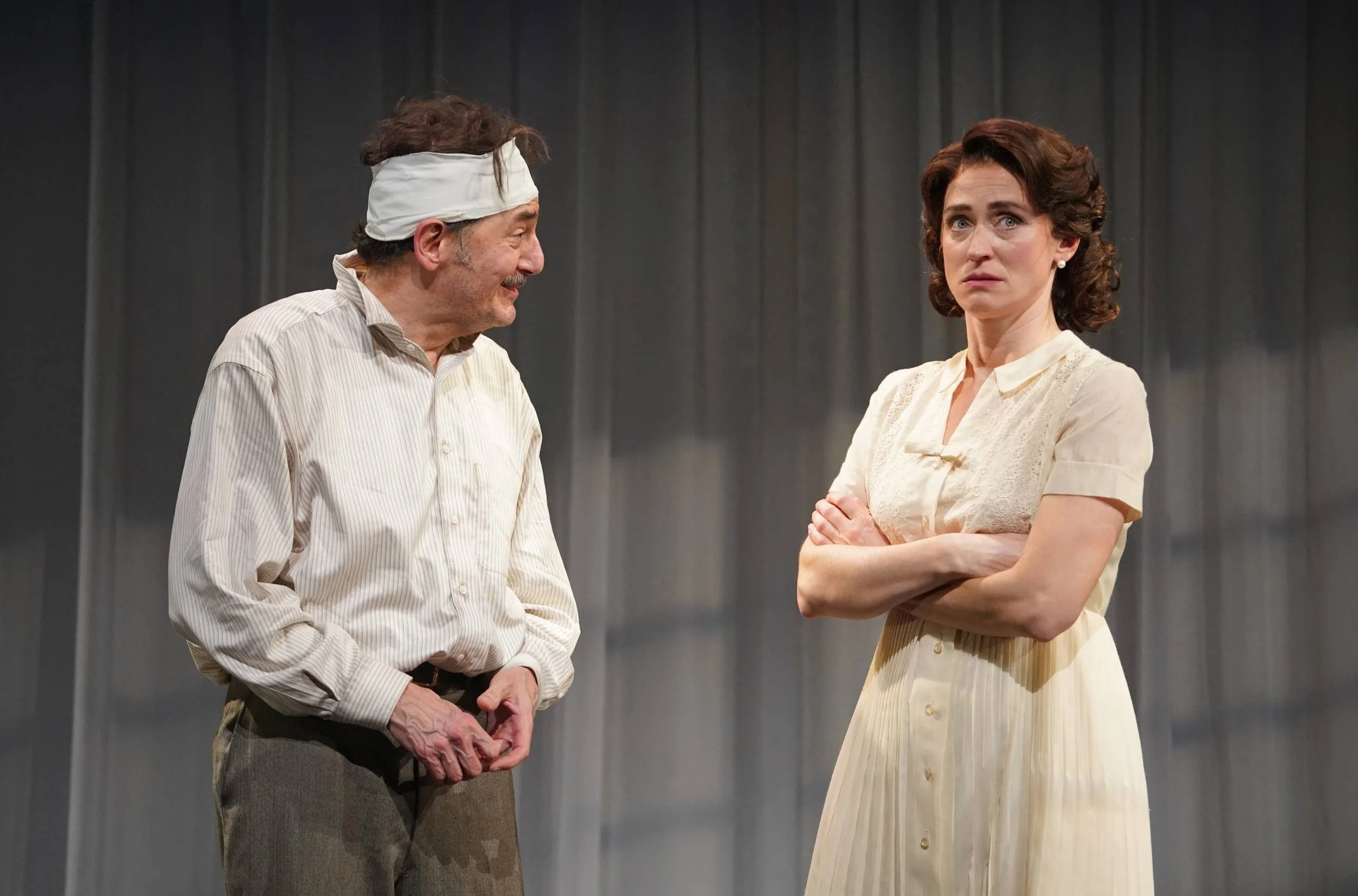
As Linda Loman, Adriene Krstansky gets the last word, and her speech is a powerful flow of grief, regret, love coupled with and almost crippled by disbelief and confusion. Krstansky, like Jacobson's Willy, lets us see many sides to Linda, at times the doting wife, at times the tough-love mother, at times the bedrock reality in contrast to Willy's shaky constructions. She delivers the famous demand "attention must be paid" as the back-against-the-wall moment it is. She is the one who all along has paid attention to the rise and fall of her striving husband, seeing his pride flair up again and again no matter how beaten and, as she says, "tired." Not so much a victim of Willy, as his sons are, but rather a damaged witness.

Linda Loman (Adrienne Krstansky) in Death of a Salesman, directed by Melia Bensussen, Hartford Stage; photo by T. Charles Erickson

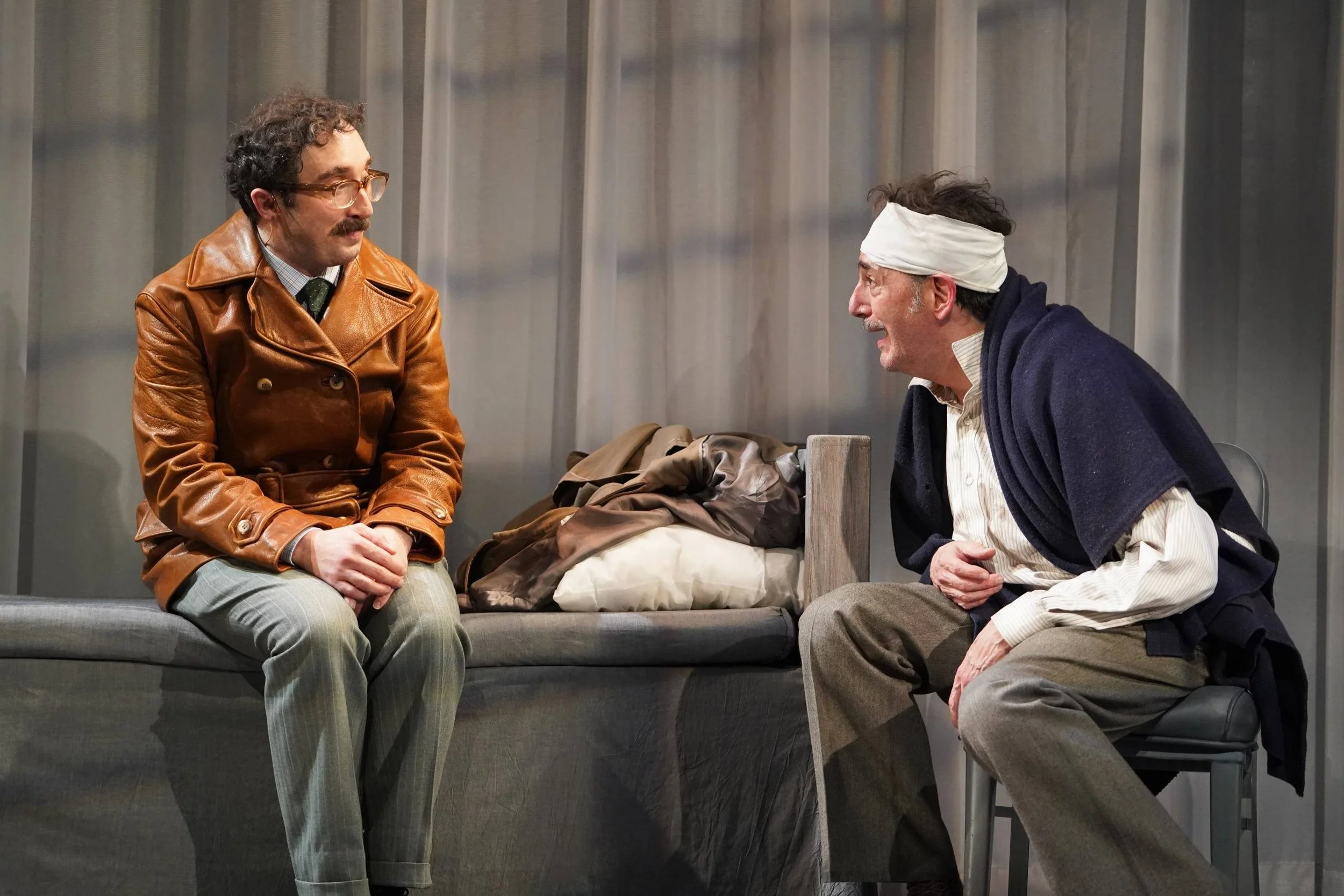
There is much excellent support here as well, in the kinds of rich character-actor roles that Miller had a definite knack for creating. Loman's sons, Biff (Samuel H. Levine) and Happy (Max Katz) run us through the paces from children adoring their father and delighted whenever he's home from the road, to containers of all his hopes who will likely never satisfy his need for their unparalleled success. Levine gives us Biff's charisma while showing the nagging uncertainty that undermines his best efforts.

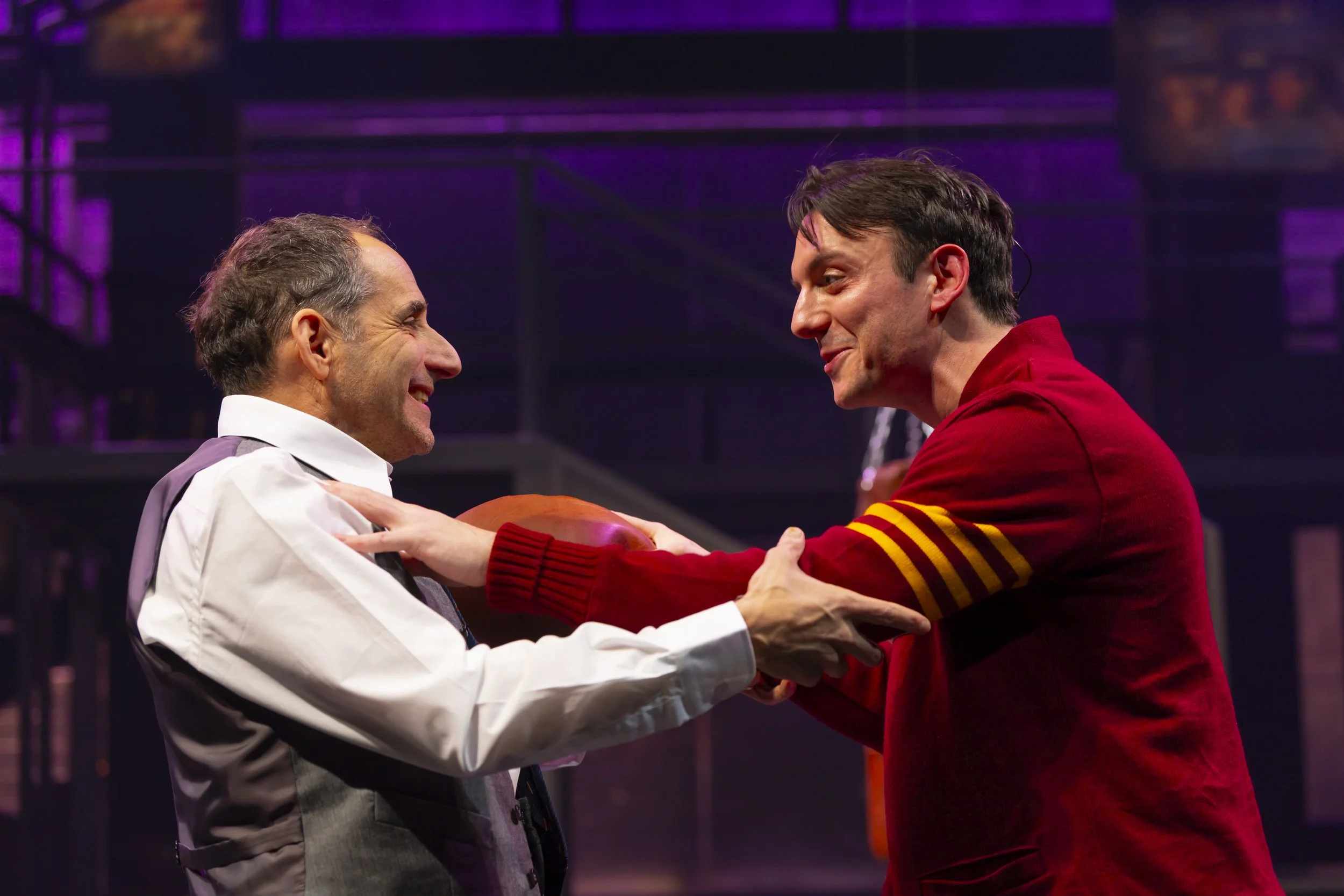
Willy (Peter Jacobson), Biff (Samuell H. Levine) in Death of a Salesman, directed by Melia Bensussen, Hartford Stage; photo by T. Charles Erickson

The big reveal scene—where we learn the rift between father and son is a shameful secret never addressed—shows us how little the two are prepared for the realities of life. They have to pretend to be what they're not and pretend that things they know aren't so. The situation itself could almost be comic, but its implications go deep to the heart of what causes so much sorrow for this family.

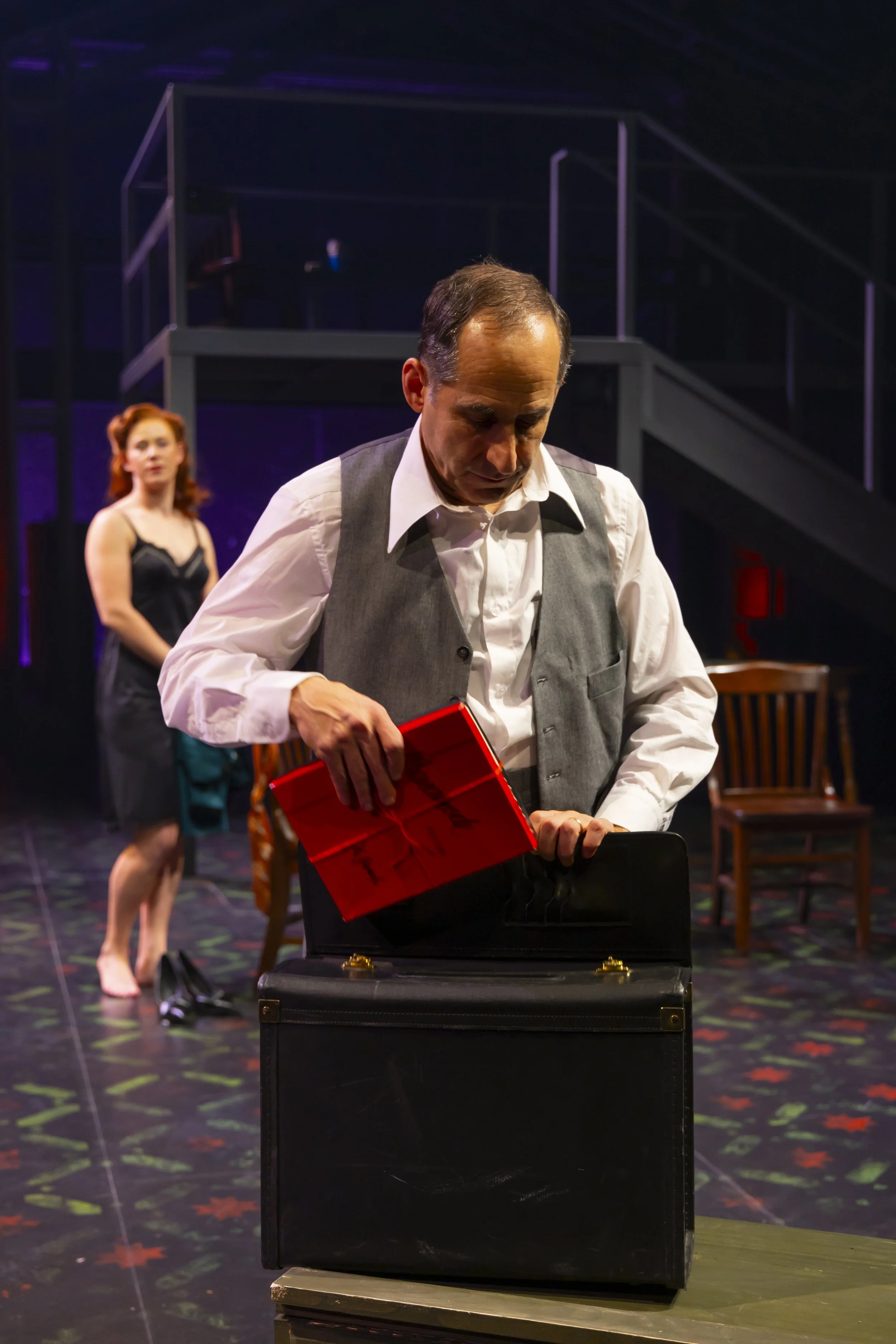
The Woman (Nora Eschenheimer), Willy (Peter Jacobson) in Death of a Salesman, directed by Melia Bensussen, Hartford Stage; photo by T. Charles Erickson

Katz's Happy, who exudes the shrugging nonchalance of a Brooklyn skirt-chaser, is damaged in his own way, as feckless and obtuse as Biff is troubled and morose. The scene when the planned celebratory dinner between Loman and sons goes awry demonstrates how keeping such disparate types under one roof—as family—is an epic struggle doomed to fail.

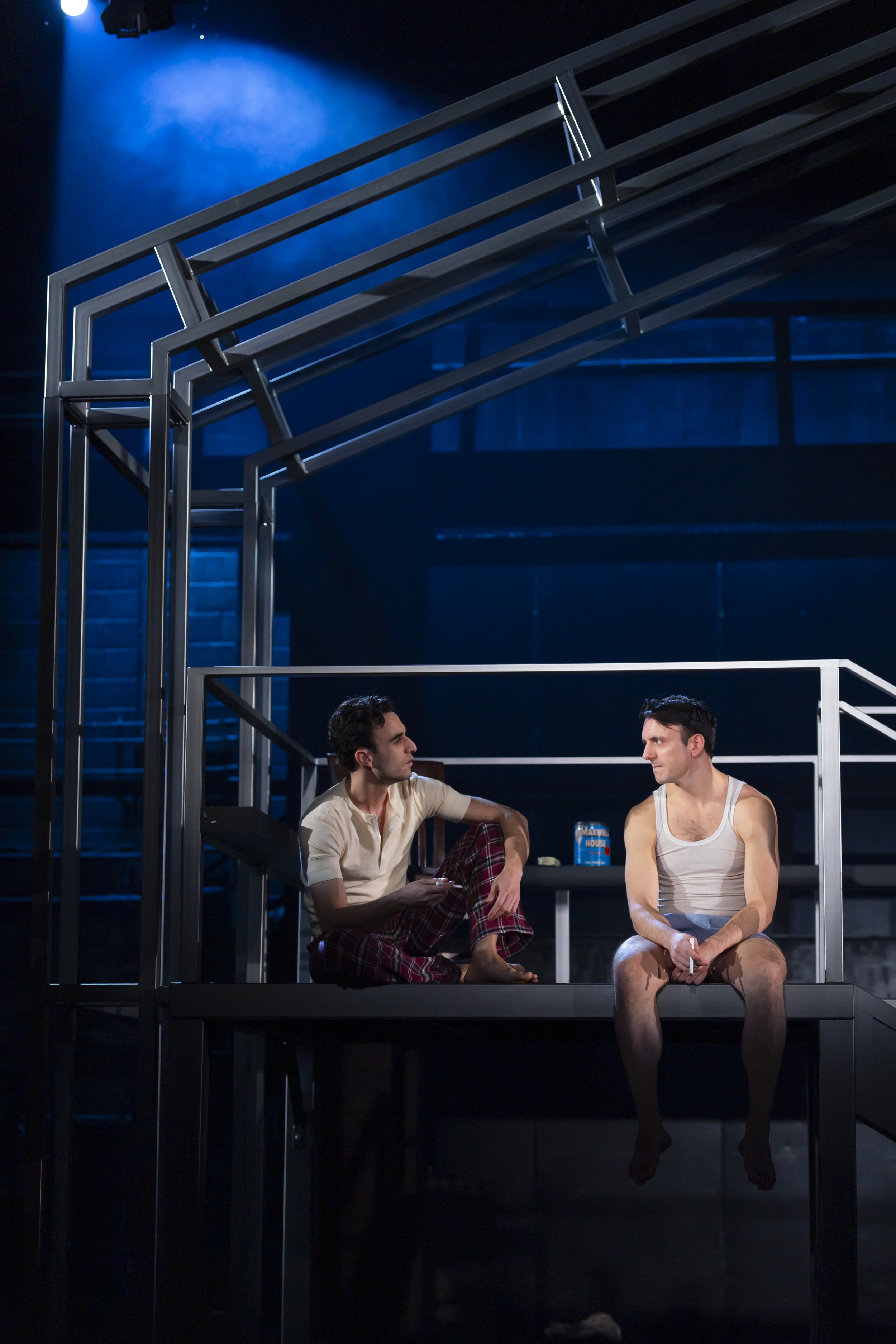
Happy (Max Katz), Biff (Samuel H. Levine) in Death of a Salesman, directed by Melia Bensussen, Hartford Stage; photo by T. Charles Erickson

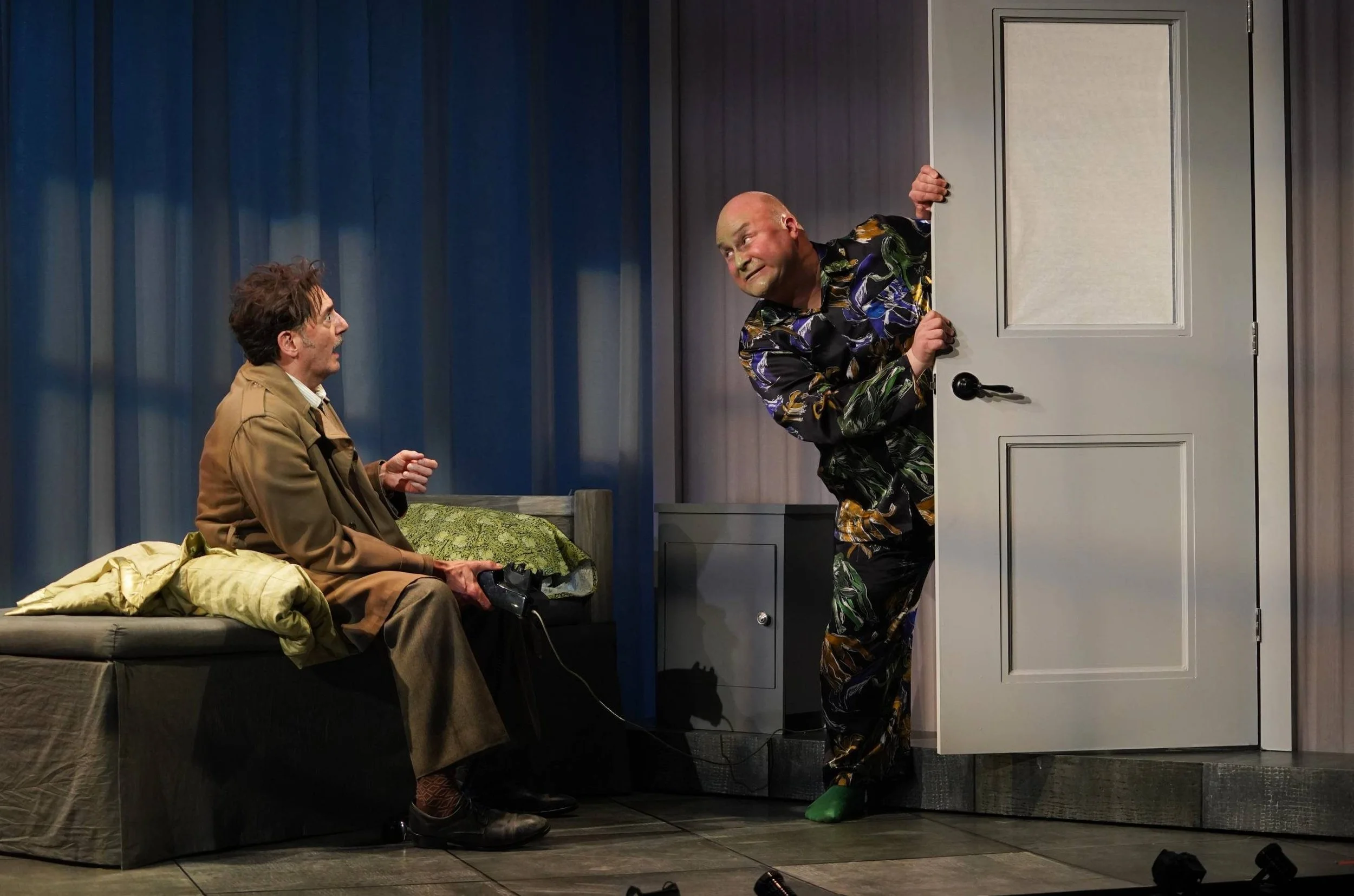
Smaller parts, no less notably realized: Michael Cullen as the steely ghost of Willy's brother Ben who steals into Willy's thoughts whenever he needs to praise a hero who "walked into the jungle at 17 and walked out at 21, rich." He's a figure who becomes more baleful as the play goes on; Stephan Cefalu, Jr., as a classmate of Biff's who, in Willy's memory, is a nerdy nobody and then, as an adult, the kind of self-effacing success that Willy can't quite credit, much as his pride won't let him acknowledge he truly needs the help of his neighbor Charley (Paul Michael Valley), who goes from a joshing to a pitying foil. The one-upmanship that Willy thrives on could have been benign once upon a time, now it's all wormwood. Likewise, his attempts to maintain an avuncular tone with his boss, Howard (Patrick Zeller), creates a telling scene that shows the minefield in Willy's mind, where any wrong step, wrong word will precipitate him into unspeakable loss—not only of livelihood but of every dream he still needs to believe. It's all very gripping and sharply ironized.

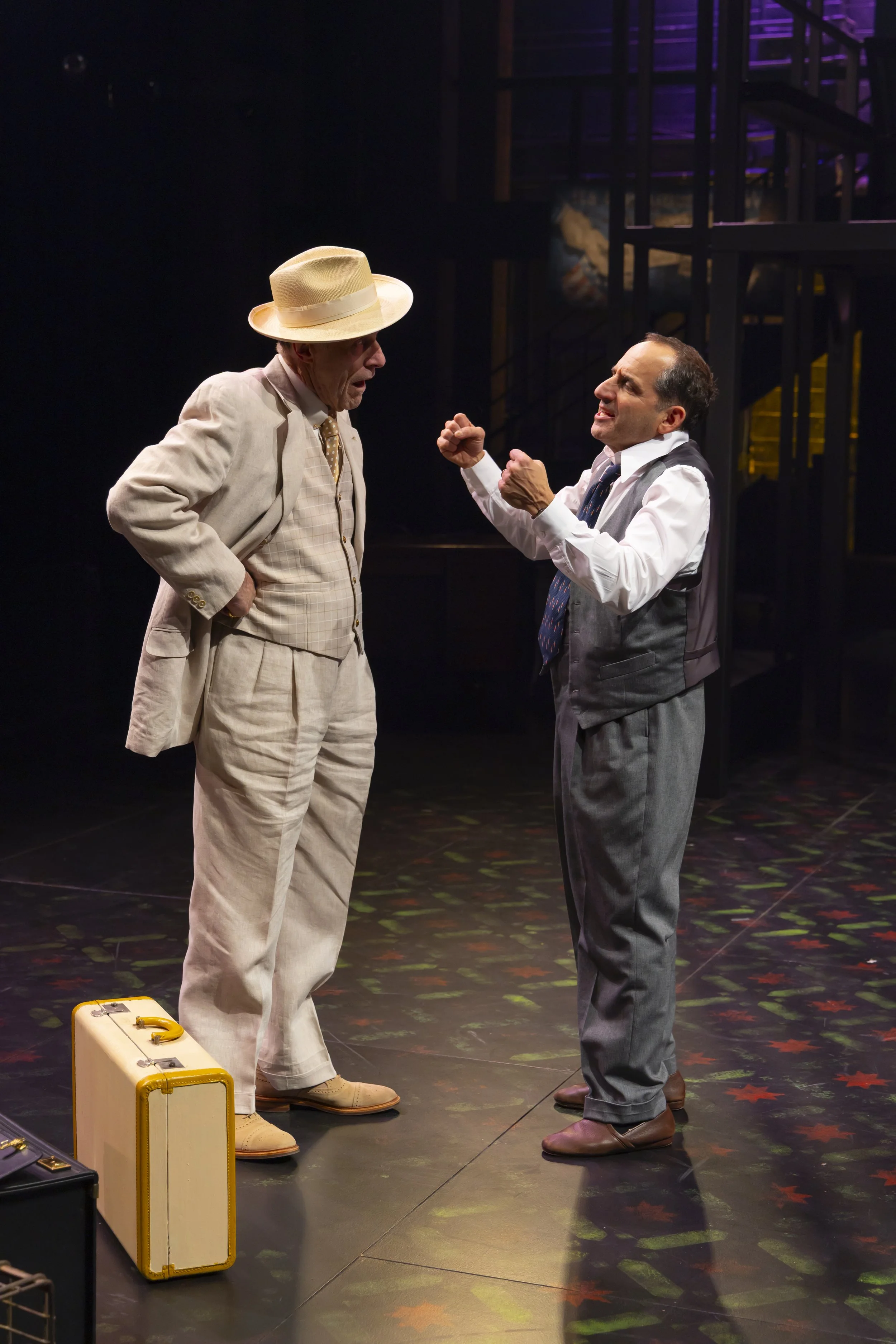
Uncle Ben (Michael Cullen), Willy (Peter Jacobson) in Death of a Salesman, directed by Melia Bensussen, Hartford Stage; photo by T. Charles Erickson

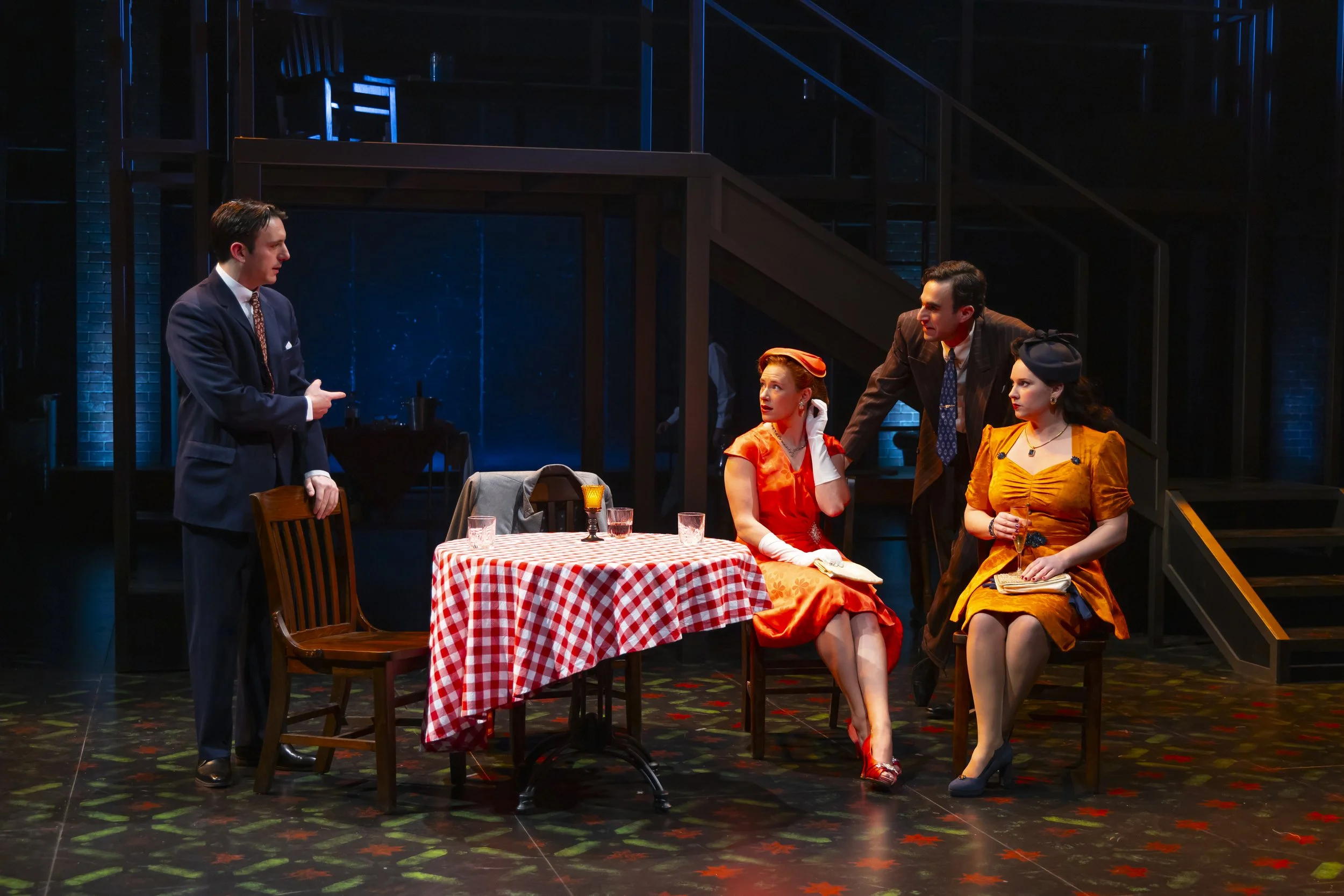
As the "other woman," Nora Eschenheimer gives presence and personality to The Woman, a role so underwritten as to border on fantasy, so that it's important to believe in her as a real person; as Miss Forsythe, a woman Happy meets casually in a restaurant, Rebecca Strimaitis portrays a cautious willingness to be charmed. Both scenes are marked by how little the women matter to the men, except as prizes won or as audience to skill or wit or to the spending of money. There are two kinds of women in the world of this play: the stay-at-home support, and the ones who try to make their way in the "man's world" of the times.

Biff (Samuel H. Levine), Letta (Nora Eschenheimer), Happy (Max Katz), Miss Forsythe (Rebecca Strimaitis) in Death of a Salesman, directed by Melia Bensussen, Hartford Stage; photo by T. Charles Erickson

Death of a Salesman's rich central character has been portrayed by many great actors, among them Lee J. Cobb, George C. Scott, Dustin Hoffman, Brian Dennehy, Philip Seymour Hoffman, Wendell Pierce. A Broadway revival of the play will be opening soon, with Nathan Lane and Laurie Metcalf. It may indeed be superlative, but if you care about this play, do yourself a favor and get to Hartford for this one. When I think of Death of a Salesman from now on, it's going to be Peter Jacobson's Willy Loman I will remember.

Willy Loman (Peter Jacobson) in Death of a Salesman, directed by Melia Bensussen, Hartford Stage; photo by T. Charles Erickson


Death of a Salesman
By Arthur Miller
Directed by Melia Bensussen

Scenic Design: Sara Brown; Costume Design: Harry Nadal; Lighting Design: Matthew Richards; Sound Design: Darron L. West; Wig, Hair & Make-up Design: J. Jared Janas; Fight Director: Ted Hewlett; Dialect & Voice Coach: Julie Foh; Casting: Alldaffer & Donadio Casting; Production Stage Manager: Nicole Wiegert; Assistant Stage Manager: Julius Cruz; Associate Artistic Director: Zoë Golub-Sass; Director of Production: Bryan T. Holcombe; General Manager: Emily Van Scoy

Cast: Stephan Cefalu, Jr.; Michael Cullen; Nora Eschenheimer; Mike Houston; Peter Jacobson; Max Katz; Adrianne Krstansky; Samuel H. Levine; Rebecca Strimaitis; Paul Michael Valley; Patrick Zeller

Hartford Stage
February 27-March 29, 2026

NHTC Wages Steven Carl McCasland's "Little Wars"

Preview of Little Wars, New Haven Theater Company

Next week, Thursday, March 5th, New Haven Theater Company opens its three weekend run (Thursdays through Saturdays) of Steven Carl McCasland's Little Wars, directed by company member John Strano, an ensemble piece about seven women, mostly writers, who have come together for a social evening on June 22, 1940. "It's a work of speculative fiction," Strano stresses, and it involves some big names at a dinner party on a fateful date. In a house in the French Alps, the women—Gertrude Stein (1874-1946), Alice B. Toklas (1877-1967), Lillian Helman (1905-84), Dorothy Parker (1893-1967), Agatha Christie (1890-1976), "Mary" (an alias), and Bernadette (the only character completely fictional)—hear a radio broadcast which declares that Marshal Philippe Pétain, as prime minister of France, has signed an armistice with the Axis powers.

Last week I spoke to director Strano, company member Deena Nicol-Blifford (who plays Stein), company president and the play's producer, J. Kevin Smith, and visiting artist Ash Lago (who plays Toklas) about the intricacies of the play.

Strano pointed out that the first third of the play is a comedy that "smacks of Noël Coward," as we see these women "try to outwit and outtalk each other." Though their reputations precede them, the seven are mostly meeting in person for the first time. And that's where the "speculative" comes in: there's no record of such a meeting having taken place, yet, Strano said, McCasland's script is based on much background knowledge of these formidable women. Stein and Toklas, of course, were a lifelong couple, immortalized in Stein's memoir The Autobiography of Alice B. Toklas (1933), while Parker and Hellman were friends since 1935, with the latter the executor of Parker's will. Agatha Christie would seem to be the odd-woman-out, but Strano explained her presence: according to McCasland, an early read drew the comment that "there's a mystery" in the play, which occasioned the introduction of the world's most famous mystery writer. Then there's the "mystery woman," known as Mary, and the fictional Bernadette.

For Strano, the play is "arguably timely" and "provides an extraordinary showcase for the talented women" of the company, whose distinct voices he feels fortunate to bring together as the play's director. After the initial comedy of the women meeting up, the play pivots on the kinds of unique stories they might tell one another. "It's not group therapy," says Strano, but we are privy to "what all these talented intellects had to deal with as women in a man's world." As interlocutors at an "alcohol-fueled, fantasy dinner party," the women show a willingness to share what Strano calls "the shame and guilt" of their pasts. Finally, the dramatic challenge from the outside world makes them confront how people can be "complicit by being complacent," so that silence about injustice contributes to injustice. The women then shift from what Ash Lago called "the little wars that wear people down," waged by the women as they make their way in the world, to the larger war against fascism and its murderous plan. Strano sees the play as a parable or allegory, in which situations of our present day find a relevant echo.

To earn a production by the New Haven Theater Company, a play must be proposed by a member, then be read by all, and then agreed upon by all. Strano's commitment to the play stretched over three seasons after he attended a Zoom read of the play in 2020 or 2021. Nicol-Blifford spoke of Strano's "passionate persistence" in advocating the play, and said that one consideration was that a seven-person cast makes Little Wars a "big play" for the company, particularly when all the actors must be women. The Company has traditionally consisted of more men than women, but, now, with five female company members taking part, joined by two visiting artists, the play is having its moment. Sandra Rodriguez, who played Elizabeth Bishop in NHTC's production of Dear Elizabeth, directed by Smith in fall 2024, plays Hellman, and Jodi Williams, who, with Ash Lago, appeared in One Flew Over the Cuckoo’s Nest, plays Dorothy Parker. Longtime member Margaret Mann, last seen in The Christians in 2025, and a co-director on several recent shows, in addition to starring in Marjorie Prime in 2019, plays Christie; as Bernadette, visiting artist Lynnette Victoria makes her NHTC debut, while the key role of “Mary” is played by Abby Klein, who acted in both Dear Elizabeth and Webster’s Bitch.

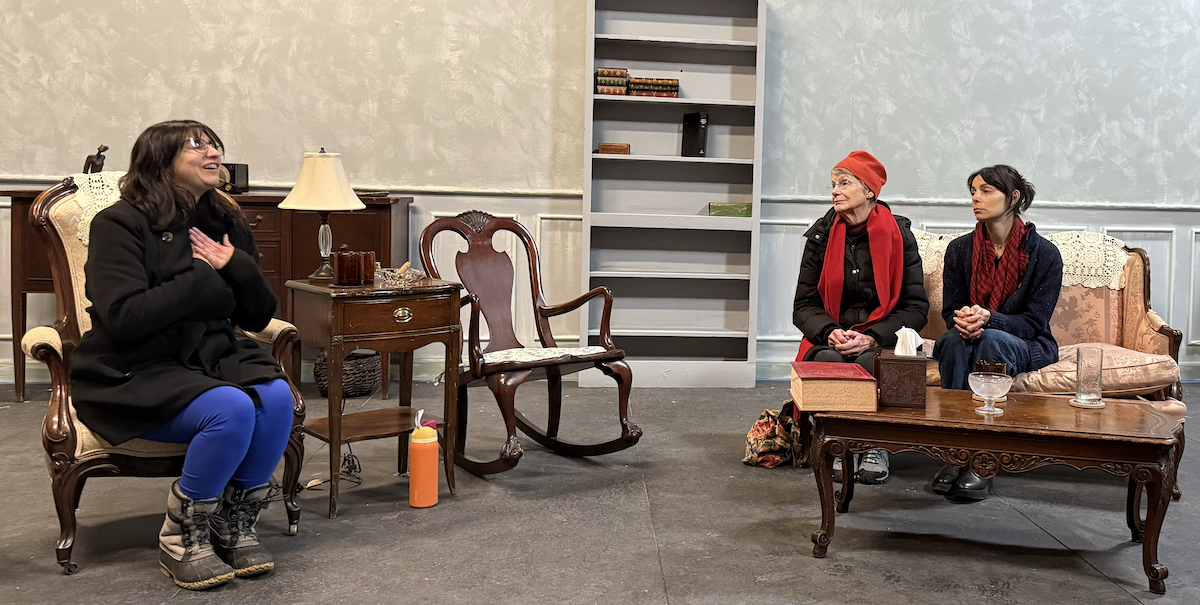
Rehearsal for Little Wars, with Ash Lago, Margaret Mann, Abby Klein

For Lago and Nicol-Blifford, Stein and Toklas present "solidly a unit" that grounds the play. Nicol-Blifford commented that their performances are not meant as "imitations" of the two famous women, but that McCasland has deliberately borrowed a few lines from the various authors that will be recognizable to viewers familiar with the women's writings. Lago noted that Toklas' number of lines significantly decreases once all the guests are assembled, which seems to be in-keeping with the self-effacing manner of Toklas, as fictionalized by Stein in the Autobiography. Lago sees Toklas as at times "more empathetic" than Stein and "anchoring" the couple during hard things that come up in the play. For Nicol-Blifford, getting into the part meant seeing that, as an actor, it's important to learn from a character, whether we "like them or not as people." Playing people who actually lived means "there's so much gray area" about what they thought or did; they aren't simply bounded by the text of the play. For Nicol-Blifford that means giving Stein due centrality; "she's very, very smart and several steps ahead of everyone else."

A noted innovator in literary writing, as well as an art collector and mentor to many artists, such as Picasso, and authors such as Hemingway, Stein's reputation continues to increase. It will be interesting to see her presented in a setting both real and fictional, dealing with other female writers of notable accomplishment. Hellman was a major playwright of her time, and most of her plays dealt with significant social issues; Parker was a poet and writer known for her scathing wit. Though both were anti-fascist leftists, Hellman was for a time associated with the communist party in its Stalinist period. The women's politics will no doubt be of some significance in how they respond to the challenges of the time the play depicts.

While we talked about the play, I recalled the staged reading of Arthur Miller's Incident at Vichy which NHTC presented in 2016. Turns out that McCasland's play dates from about 2015, so that the timely fear of a fascist, racially-profiling regime unites the two plays. I expect McCasland's play will be a bit more upbeat in its close, though that remains to be seen.


New Haven Theater Company presents
Little Wars by Steven Carl McCasland
Directed by John Strano

Thursday through Saturday at 7:30 pm
March 5, 6, 7; March 12, 13, 14; March 19, 20, 21

839 Chapel Street, New Haven, CT

Counter Offers

Review of The Counter, TheaterWorks, Hartford

TheaterWorks, Hartford, has a knack for finding and producing plays that provide intimate looks at everyday lives. Meghan Kennedy's The Counter, directed by Rob Ruggiero, joins a roster of plays that includes Primary Trust, The Garbologists, and Sanctuary City. There have also been notable stagings of plays like Clyde's or Queen of Basel set entirely in workplaces, or in a classroom, such as English, this season's opener. Impressively, all these plays have transformed the TheaterWorks stage into spaces that compel a realistic sense of the kinds of lives that take place there. In each case, the cast—whether two or three or half a dozen—draws us into stories that have an honest grasp of how people live and cope and interact in a variety of situations.

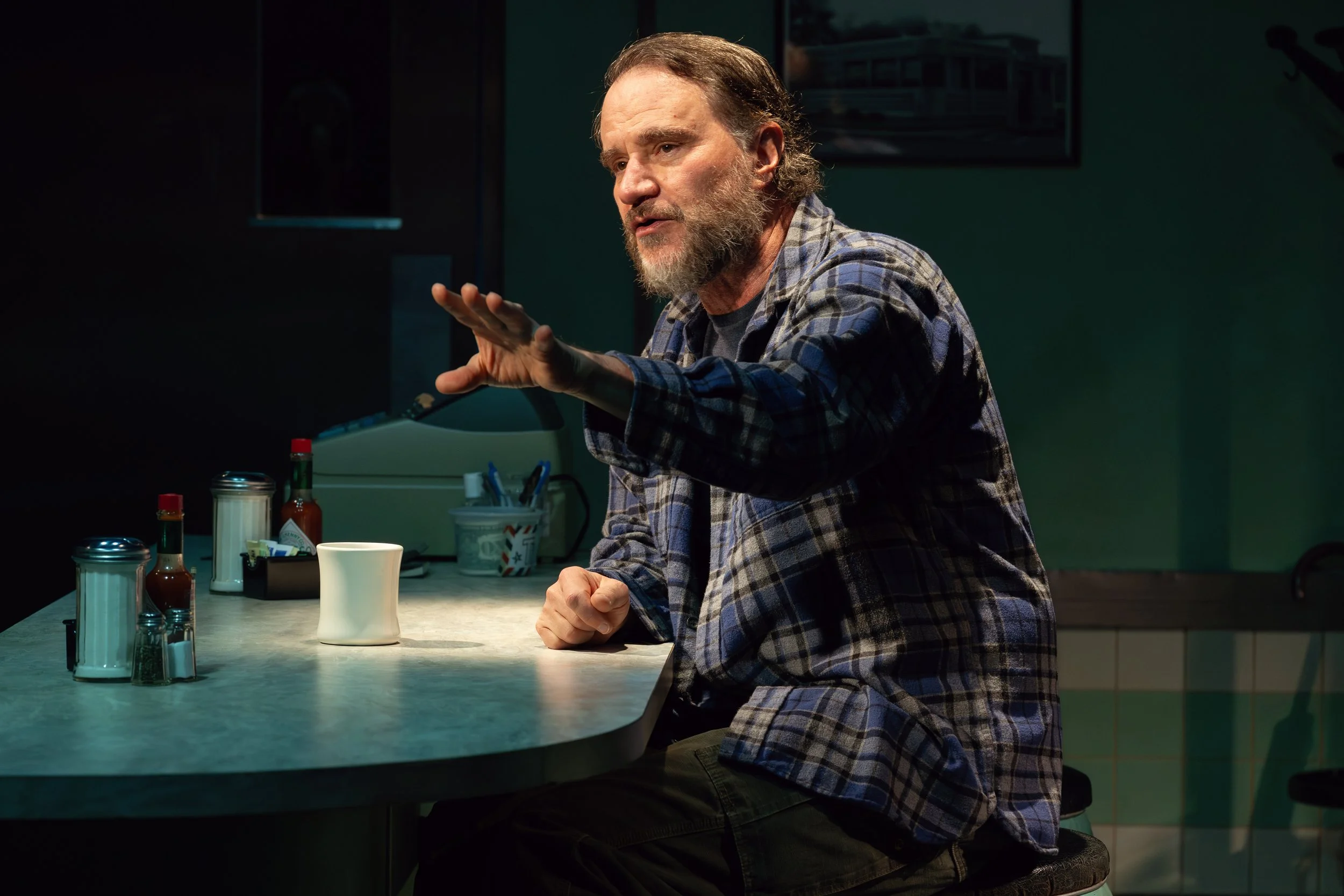
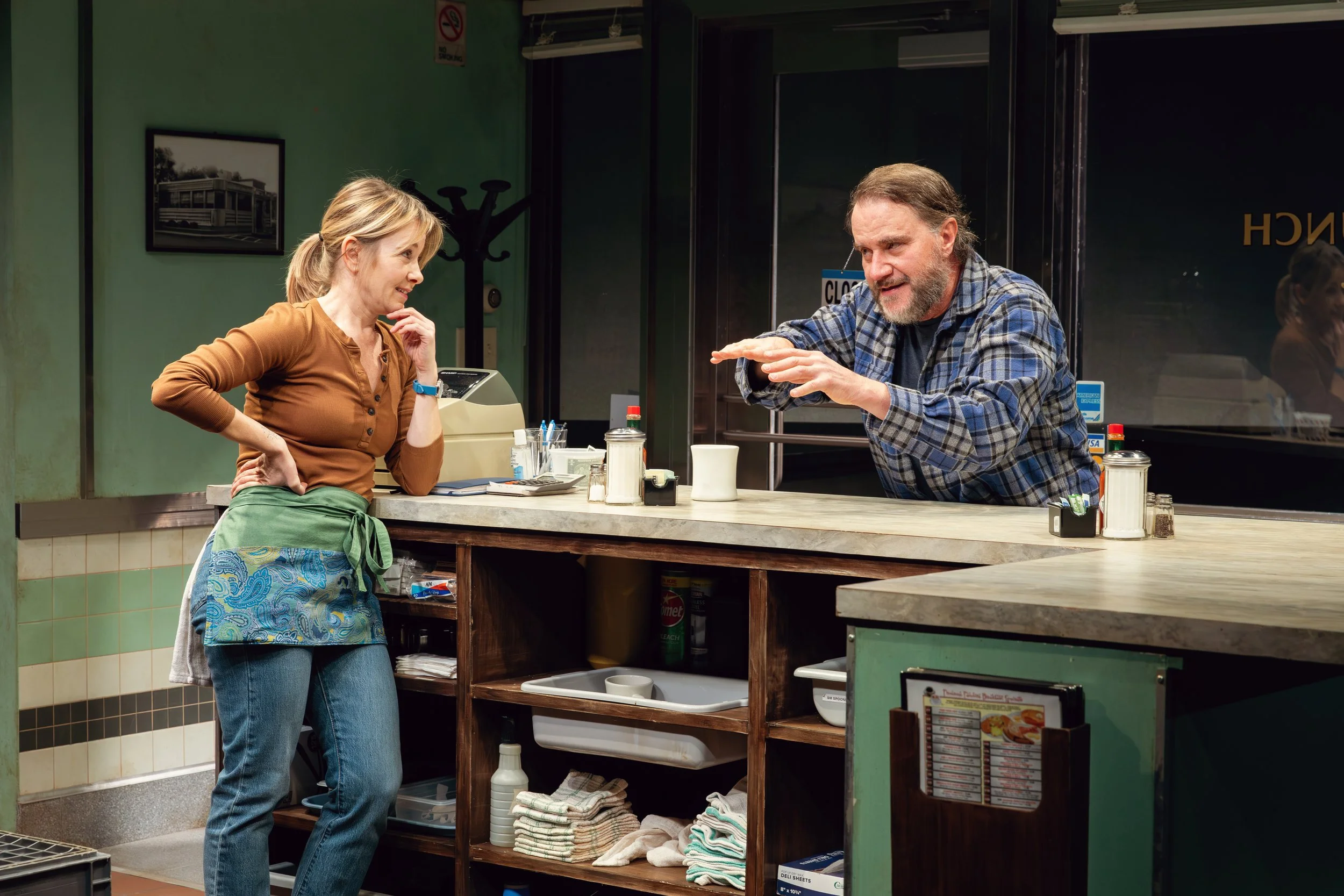
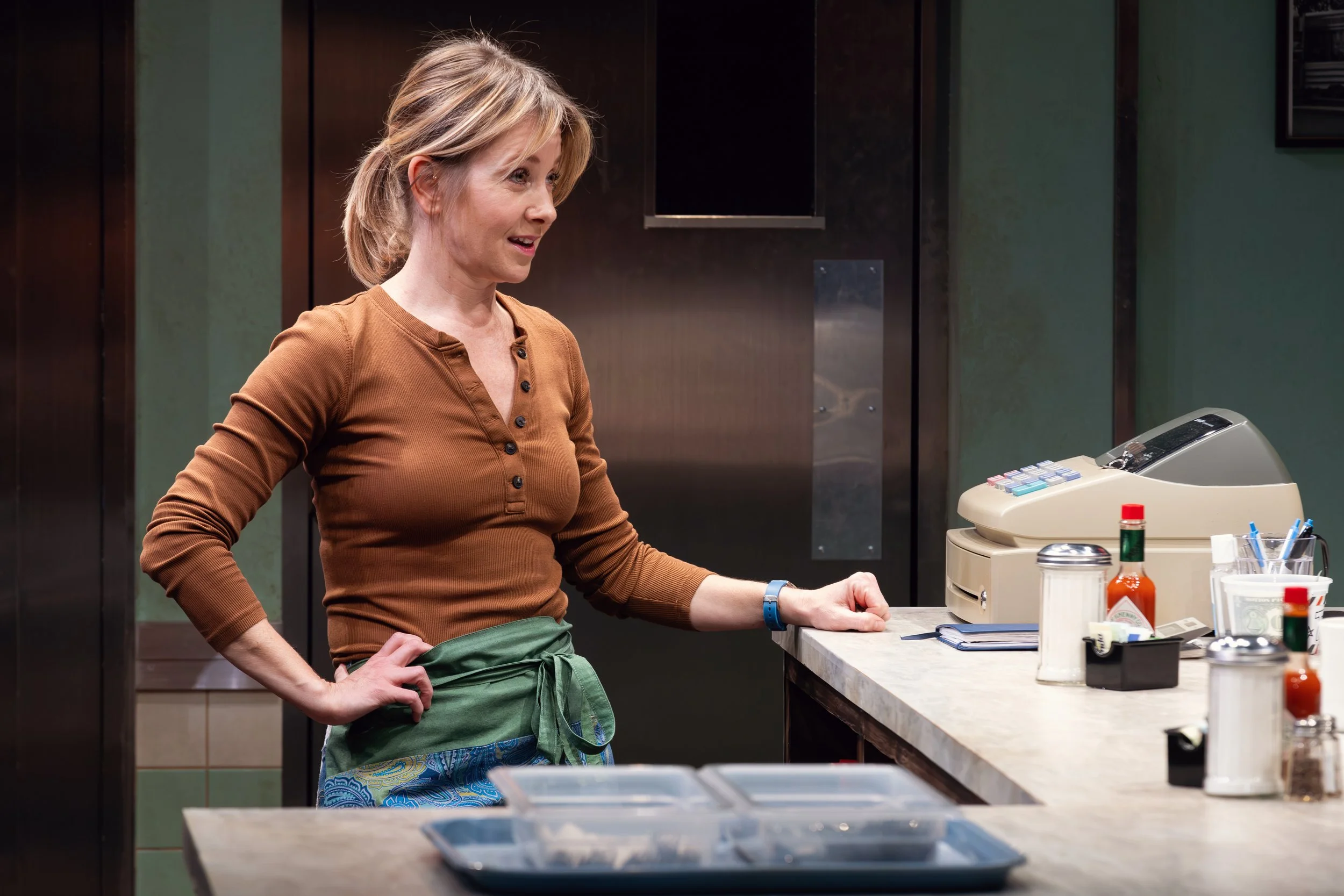
That's the strong suit of The Counter, set at the counter of a diner in upstate New York, presided over by Katie (Justis Bolding), a reasonably outgoing waitress, whose first customer most days is Paul (Tim DeKay), a retired firefighter who gradually makes requests that up the drama level between them but which also open each to our scrutiny. How you read their manner, their stories, their exchanges will determine to a large extent what you get out of watching them get to know each other.

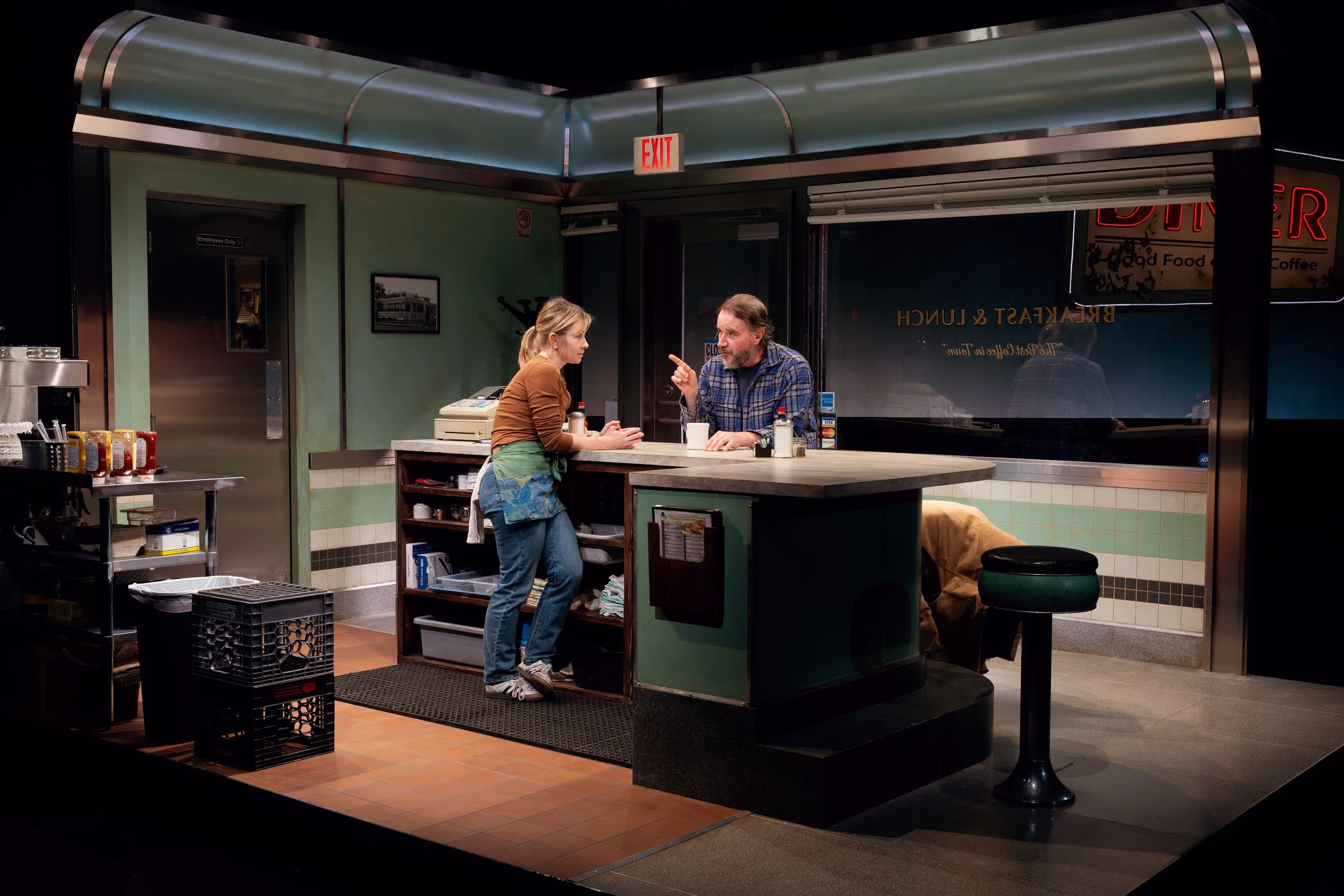
Katie (Justis Bolding), Paul (Tim DeKay) in The Counter, TheaterWorks Hartford; photo by Curtis Brown

The set by Tijana Bjelajac creates the kind of trustworthy diner counter where almost anyone would feel comfortable killing time. The unpretentious setting immediately establishes the tone of the encounters at the counter. But the fact that to "counter" is to respond, possibly to contradict or oppose, might also suggest that the give-and-take of these two unassuming types will take them down unexpected paths. There's also perhaps an implied sense of "counting" on someone or something, which, as the play goes on becomes more and more relevant.

Paul (Tim DeKay) in The Counter, TheaterWorks Hartford; photo by Curtis Brown

Both actors provide engrossing character studies of two people whose complexity emerges slowly, as each rises to the challenge of the other. Katie, we learn, has come to this little town and this small-scale job to get away from where she lived before and what occurred there. Bolding gives Katie appealing variety, allowing her to be both touching and amused; she's patient and cautious, but gradually makes her own neediness manifest. Paul, who has always lived in the same town, has a past that makes him a bit of a hero, both sung and unsung, and DeKay's performance keeps us guessing about Paul's deeper conflicts until we learn how unmoored he's become. The encounters at the counter come to represent a last bid for real friendship, the kind with tough truths. We may have become, as audiences, more than a little too familiar with the fact that some kind of trauma must lurk in the background of any life deemed worthy of theatrical enactment, but, if so, there's no denying that unpeeling the layers gives a playwright something to do for nearly ninety minutes.

Katie (Justis Bolding), Paul (Tim DeKay) in The Counter, TheaterWorks; photo by Curtis Brown

The dialogue between Katie and Paul moves easily from small-talk—about Netflix and diet and sleeping problems—to bits of wisdom and advice, to sharing secrets, to necessarily tough talk. A brief appearance by Peg (Erika Rolfsrud), a married doctor who had an affair with Paul, helps establish his emotional past, and also lends more credence to Paul's request to Katie that hangs over the entire play. Without giving too much away, let's say that Paul is looking for a way out of a life he's tired of leading and hopes Katie will aid him. And, of course, if the request doesn't involve love, then it must involve death.

Katie (Justis Bolding) in The Counter, TheaterWorks Hartford; photo by Curtis Brown

Katie's "counter" to Paul's request is also a way to leave the past behind: in her case, 27 voice messages from a man she once had hopes for, but who seems to have treasured her in a more platonic way. The script suffers a bit in its rendering of this relationship, since we never see the man in question, unlike our view of Peg and Paul together, and only hear a few of the voice messages. The fact that this figure from Katie's past becomes pivotal at the close feels more than a little contrived—so as to end the Katie and Paul encounters with a bit of "beau ex machina."

That said, the play's ending brings this phase of things to a close and the spotlight on that coffee cup on the counter makes it hang in the balance.


The Counter
By Meghan Kennedy
Directed by Rob Ruggiero

Set Design: Tijana Bjelajac; Costume Design: Risa Ando; Lighting Design: Matthew Richards; Sound Design: Minjae Kim; Original Music: Billy Bivona; Stage Manager: Tom Kosis

Cast: Justis Bolding, Tim DeKay, Erika Rolfsrud

TheaterWorks, Hartford
February 12-March 15, 2026; extended through March 22nd

A Comedy of Lovers

Review of The Cottage, Hartford Stage

In Sandy Rustin's farcical comedy, The Cottage, playing at Hartford Stage through February 7, it's 1923 and the eponymous cottage is located "about 90 minutes outside London." The date has significance because, as dramaturg Sophie Greenberg reminds us in the playbill, in British history women had gotten the vote and, very recently, the right to divorce for a spouse's infidelity, and, we might add, the ability to inherit independently of husbands. All this is meaningful for how The Cottage plays out, ultimately, but it would be a shame to weigh down the fluff of this play with heavy social meaning. It's more a case of giving the women in the play a bit more autonomy than they might enjoy in a play actually composed in the 1920s.

Briefly: the cottage belongs to the ailing mother of two brothers, Beau (Jordan Sobel) and Clarke (Craig Wesley Divino), who like to use it for extramarital trysts. We first meet Beau's beau, Sylvia (Mary Cavett), as she preens on a couch in a negligee, awaiting her lover on the morning after their yearly sexcapade.

Sylvia (Mary Cavett), The Cottage, Hartford Stage (photo by T. Charles Erickson)

Both are married, you see, and Sylvia's husband happens to be Clarke. When Sylvia gets around to telling Beau she's sent out a telegram to Clarke, informing him she's leaving him for Beau, we've got a situation: Beau seems not that keen. Meanwhile, Clarke and the other recipient of a telegram, Beau's pregnant wife, Marjorie (Kate MacCluggage), arrive separately. And we learn something neither of their spouses had suspected.

Marjorie (Kate MacCluggage), Beau (Jordan Sobel), The Cottage, Hartford Stage (photo by T. Charles Erickson)

We might think we've got enough going on right there, but no. Beau—"the best-looking man in London" we're told—has also been unfaithful to Sylvia and to Marjorie with Dierdre (Jetta Juriansz), who presently arrives, elated, with her divorce papers from Richard. But is Beau likely to be happy about that? And what about Richard who, as Dierdre explains, is apt to be homicidal in his jealousy. Meanwhile, we learn that one reason Sylvia is not altogether upset by Beau's unfaithfulness, nor Clarke's, is that she was once truly in love but lost William in the war. Can you see where this is going?

Dierdre (Jetta Juriansz), Clarke (Craig Wesley Divino), Marjorie (Kate MacCluggage), Sylvia (Mary Cavett), The Cottage, Hartford Stage (photo by T. Charles Erickson)

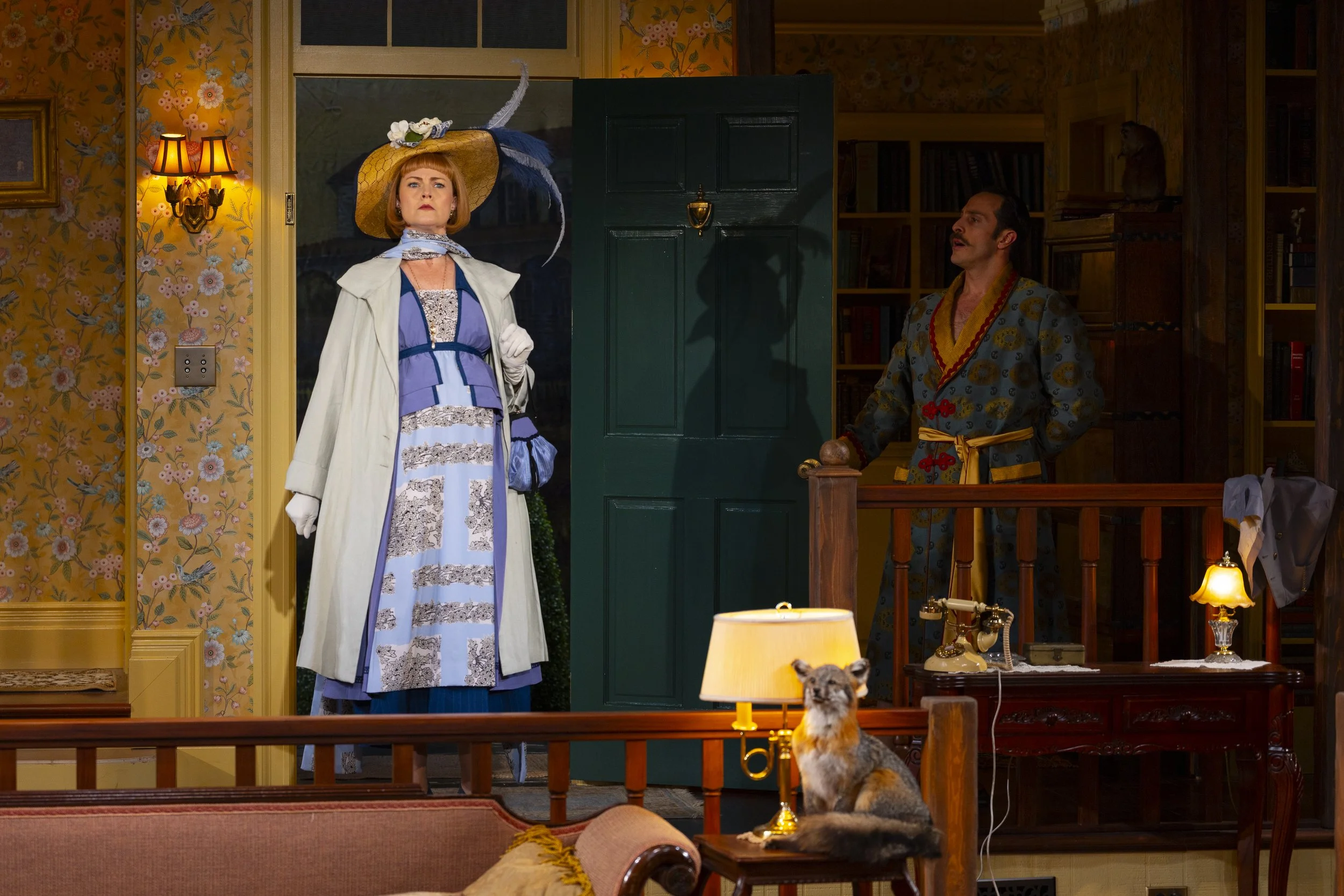
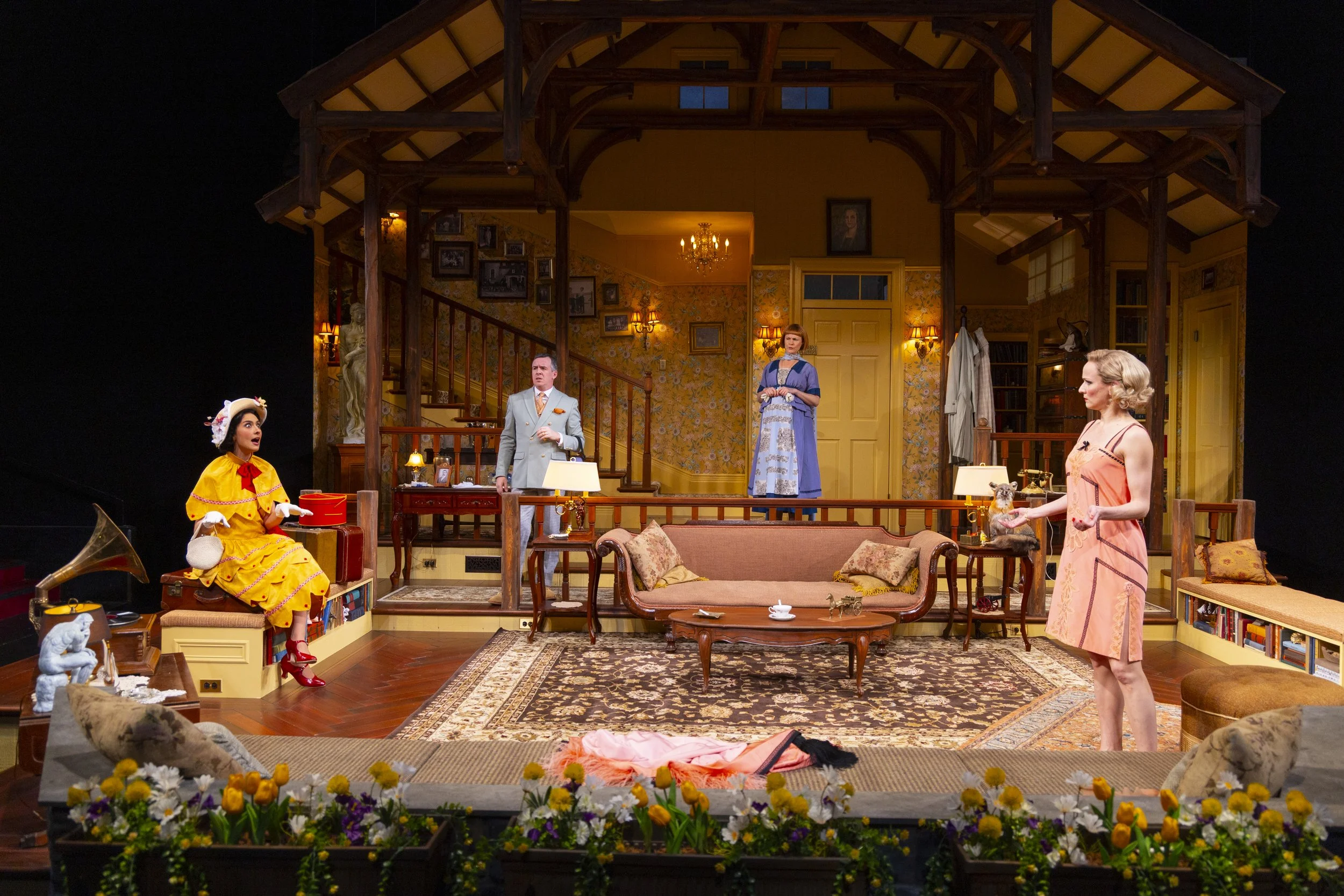
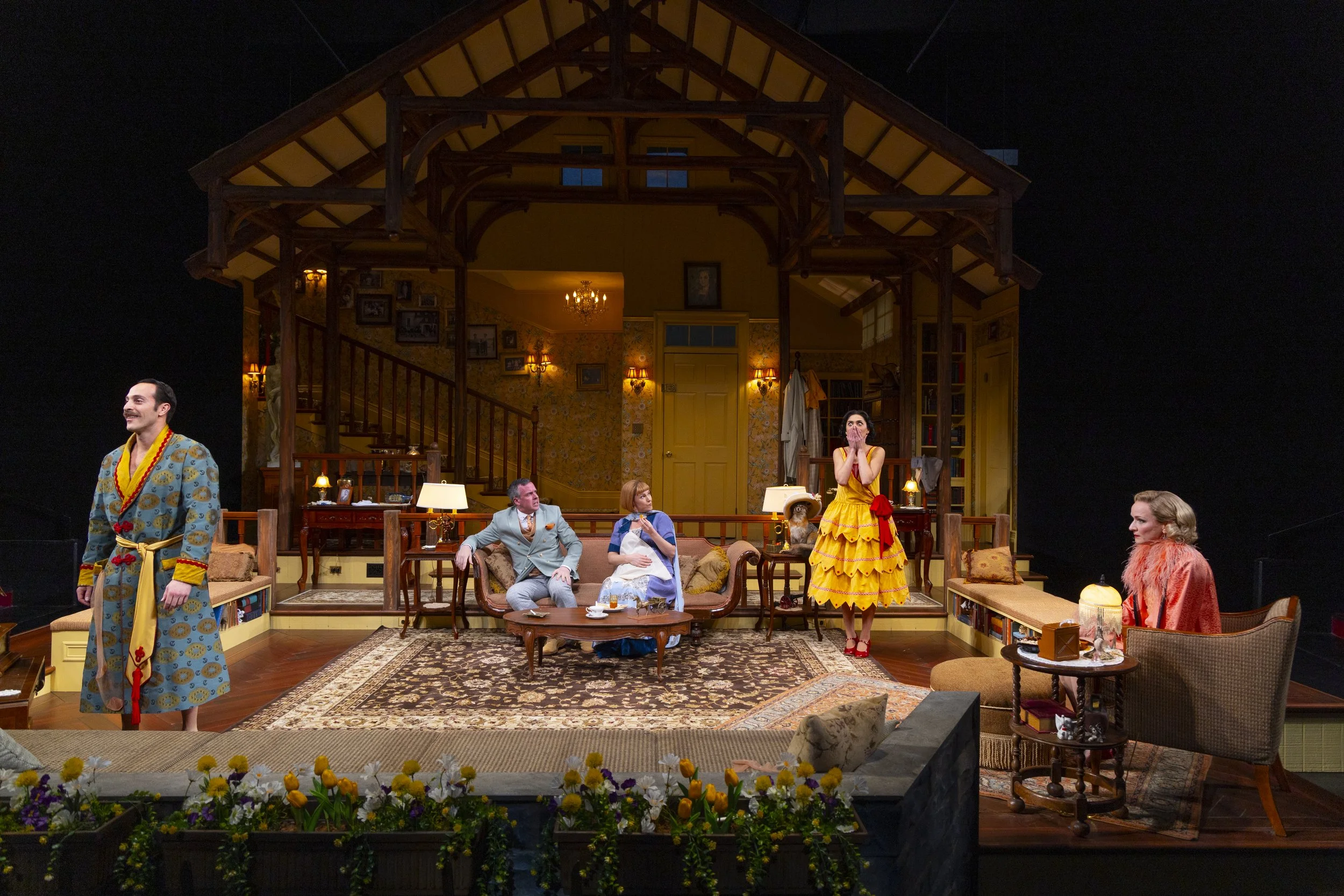
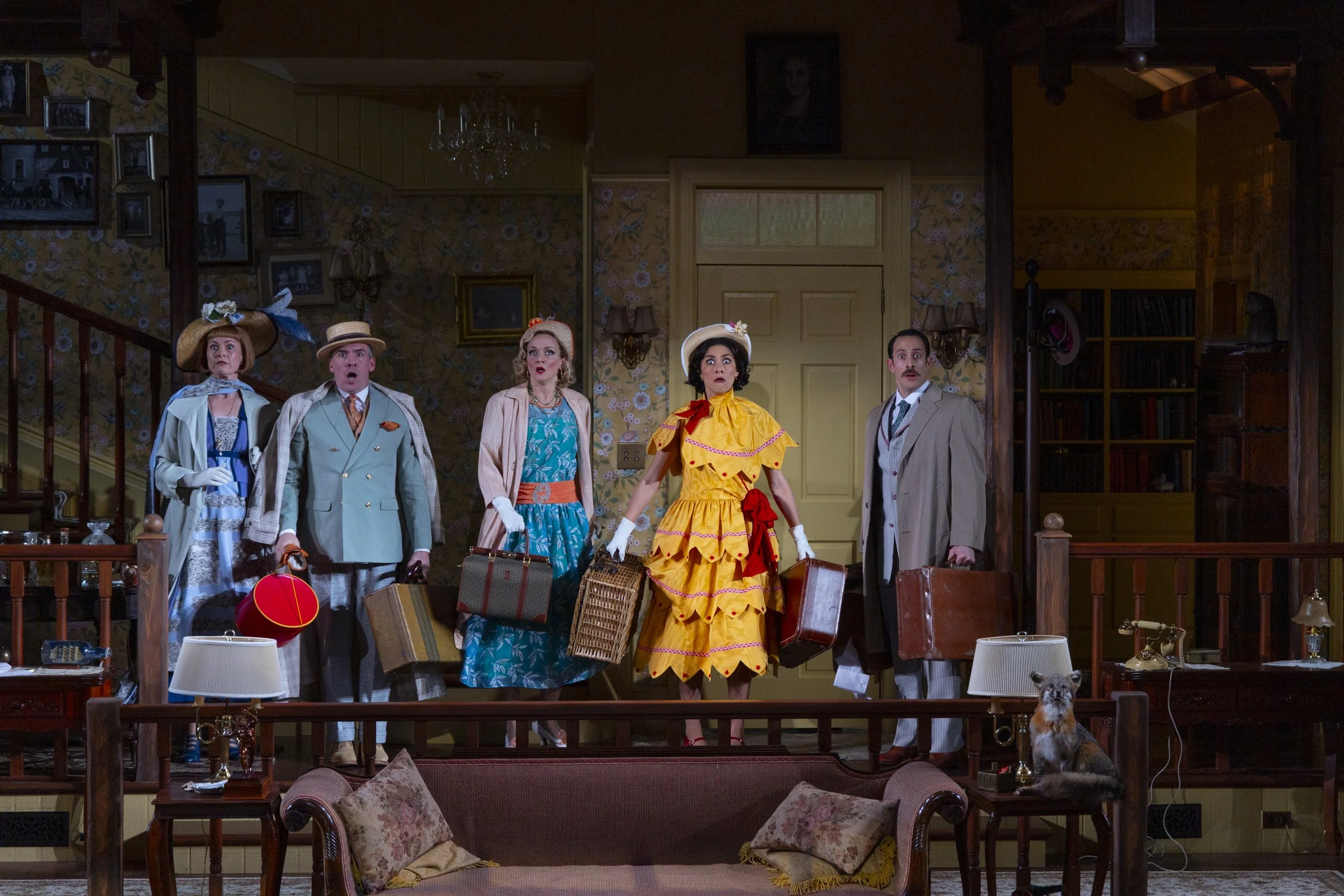
Enough about the plot. How about that set? By Tim Mackabee, the cottage is quite a catch, and not only is it spacious and tasteful, it's got jokey props sitting all over and is perfect for a pratfall down the stairs, and its front-door, often pounded upon for entry, has the presence of a character, especially with Mom's portrait looking down from above. As with many a Hartford Stage production, scenery adds so much to how the show looks and how the characters move about. Here, all the busyness is always very visible. And that's important because all these actors are fully engaged in being entertaining wherever they are on stage and whatever they might be doing. There are laughs galore.

Beau (Jordan Sobel), Clarke (Craig Wesley Divino), Marjorie (Kate MacCluggage), Dierdre (Jetta Juliansz), Sylvia (Mary Cavett), The Cottage, Hartford Stage (photo by T. Charles Erickson)

Director Zoë Golub-Sass, Hartford Stage's Associate Artistic Director, lets her able cast make the most of every weird foible of these characters. Richard, who shows up in Act 2, is made a study in amusing oddity by Matthew J. Harris's mercurial presentation, and Jetta Juriansz's Dierdre, while having to carry a bit too much backstory, is a comic delight, whether skulking in the background, or drunk and splayed, or occasionally offering comments so apropos she surprises herself.

Richard (Matthew J. Harris), Dierdre (Jetta Juriansz), Marjorie (Kate MacCluggage), Clarke (Craig Wesley Divino), Beau (Jordan Sobel), The Cottage, Hartford Stage (photo by T. Charles Erickson)

As Clarke, Craig Wesley Divino runs a gamut of silliness—his effort to rush to his wife's defense is total slapstick—but also manages to be almost intelligent when required. Kate MacCluggage, as Marjorie, plays self-satisfied quite well as well as sexually voracious and gets to mime a rip-roaring fart that everyone gets to react to. It's that kind of play.

Marjorie (Kate MacCluggage), Clarke (Craig Wesley Divino), Sylvia (Mary Cavett), Dierdre (Jetta Juriansz), Beau (Jordan Sobel), The Cottage, Hartford Stage (photo by T. Charles Erickson)

As the couple who changes most, Jordan Sobel's Beau gets a series of shocks and surprises that keep him almost wholly in reaction mode, played with remarkable energy; as Sylvia, Mary Cavett becomes more interesting the more she disengages from the various males who presume to be meaningful to her. Even if each once was, are any now?

Beau (Jordan Sobel), Sylvia (Mary Cavett), The Cottage, Hartford Stage (photo by T. Charles Erickson)

The final takeaway is that all a woman really needs is a cottage of one's own, to vary Virginia Woolf's well-known, apt observation (first delivered in 1928).


The Cottage
By Sandy Rustin
Directed by Zoë Golub-Sass

Scenic Design: Tim Mackabee; Costume Design: Hunter Kaczorowski; Lighting Design: Evan C. Anderson; Sound Design: Nathan A. Roberts and Charles Coes; Wig & Hair Design: Timmy Kurzman; Fight Coordinator: Michae Rossmy; Dialect & Voice Coach: Julie Foh; Casting: Alldaffer & Donadio Casting; Production Stage Manager: Avery Trunko; Assistant Stage Manager: Alison Fischer Greene; Director of Production: Bryan T. Holcombe; General Manager: Emily Van Scoy

Cast: Mary Cavett, Craig Wesley Divino, Matthew J. Harris, Jetta Juriansz, Kate MacCluggage, Jordan Sobel

Hartford Stage
January 16-February 8, 2026
You Have to Be There

Review of Ha Ha Ha Ha Ha Ha Ha, Yale Repertory Theatre

"Poetry makes nothing happen," W. H. Auden once wrote, a bit sententiously. Theater such as practiced by Estonian clown Julia Masli does make things happen, and watching that happen is a fascinating experience. Playing through February 7 in a touring production from DC's innovative Wooly Mammoth Theatre Company, Masli's HA HA HA HA HA HA HA, directed by Kim Noble and performed by Masli, is theater as happening. Or we might say: by virtue of being in the theater—Yale Repertory Theatre, corner of Chapel and York—you are in theater.

Janet Masli in HA HA HA HA HA HA HA, Yale Repertory Theatre; photo by Andy Hollingworth)

Masli, wearing a fairly outlandish costume, a kind of surreal drapery, wanders about with a light on her wrist, a microphone on the end of a golden mannikin leg covering one arm, and a recording device headdress, voicing a high-pitched inquiry: "problem?" On cue, any one she asks voices a problem—which might be anything from concerns about family, job, the state of the world, or how to do gardening or juggle school and love. Hypnotic in her movements with a candid gaze and a voice that can range from sweet naivete to commanding bluster, Masli fields each statement as though personally responsible for the speaker's concerns, a guardian angel sent to make things better. To that end, she has at her disposal a wealth of props, so when a man—a father of two—claims he's been having trouble sleeping, Masli can offer him a divan to recline on for the duration of the show, complete with sleep-mask and noise-canceling headphones. Other prop-dependent interactions involve smashing a chair and building a new one—to fix "this broken world"—a cleansing shower, building a sculpture from mannikin legs, and pizza from heaven.

The participants in the show are selected by Masli from the audience, and while the process of selection may be obscure, the effects are not. As the night goes on and more and more participants are involved, the audience becomes aware of a gradual process taking place: we're not watching a show, we're in a show. This became charmingly apparent, in the opening night performance, when a phone-call to an audience member's mother—in California—meant the recipient of the call could hear the applause, laughter and comments by the audience as a feature of the call. We were all on the line with Brenda.

And that's the genius of Masli's approach to theater: the willingness to put it all on the line. Of course this is rehearsed, scripted as well as improvised, and with considerable tech support (lighting and sound and musical accompaniment are all revelatory and fittingly relational—Alessio Festuccia, Sound Designer and Composer; Sebastián Hernández, Live Sound Designer; Jennifer Fok, Co-Lighting Designer; Lily Woodford, Original Lighting Designer; Sarah Chapin, Associate Producer, Production Manager, Stage Manager, Live Lighting Designer). Yet it feels at times like watching someone else's dream take place (the music helps that effect wonderfully), where something you might not know about yourself could surface at any moment. Which means you might find yourself wondering what "problem" you might admit, or what weight you would like to "let go," or whether you're willing to proffer a sock to Masli's collection.

The absurdist elements in the show—which will tickle different fancies differently—are offset by an earnestness that, to me, comes closest to what it's like being in a classroom and having to indulge the teacher wherever she goes with whatever she's saying. (Though this may be an effect of the fact that—as mentioned twice by Masli—James Bundy, "the Dean of Theater," was present in the audience on opening night and a fair share of the audience are or were involved with the Rep or the School of Drama or both.) As in a classroom, you may have a chance to speak, but you're mostly there to learn.

And what do we learn? That we're all in this together. A platitude, granted, and learning what that really feels like—without being at too much personal risk—is the valuable effect of HA HA HA HA HA HA HA. "You had to be there," as the saying goes, but in this case, "being there" is the entire point, and experiencing that may cause you to want to return to the only entertainment that can make that happen: live theater like Masli's, where your presence matters because only you can take your place.


A Wooly Mammoth Theatre Company Touring Production
HA HA HA HA HA HA HA
Created and performed by Julia Masli
Directed by Kim Noble

Sound Designer and Composer: Alessio Festuccia; Live Sound Designer: Sebastián Hernández; Co-Lighting Designer: Jennifer Fok; Original Lighting Designer: Lily Woodford; Associate Producer, Production Manager, Stage Manager, Live Lighting Designer: Sarah Chapin; Costume Designers: David Curtis-Ring, Annika Thiems, Alice Wedge; Technical Director: Mara Bredovskis; Consulting Producers: Maria Manuela Goyanes, David C. Frederick, Sophia Lynn; Assistant Stage Managers: Whitney Renell Roy, Claire Young

Yale Repertory Theatre
January 20-February 7, 2026