Review of Gem of the Ocean, Long Wharf Theatre
In order of creation, Gem of the Ocean is the penultimate play in August Wilson's American Century Cycle, which sets a play in each decade of the twentieth century, but it's the first in chronological sequence. As such it's the first and almost the last, and much of what Wilson concerned himself with in the twenty-plus years he wrote the ten plays is concentrated here. It's a stunning tour de force, unpredictable and fascinating, and in the end wrenching, and hopeful.
The play centers on 1837 Wylie, the location oft-cited in Wilson's plays as the home of the mysterious and possibly occult Aunt Ester. It's 1904 and a young man pounds upon her door, eager to have his soul cleansed, a service, folks told him, Aunt Ester (Denise Burse) can provide. The man is named Citizen Barlow (Matthew Elam), but lately come to Pittsburgh from Alabama and now has a heavy burden of guilt he must assuage. In Ester's home, there is a woman called Black Mary (Grace Porter) who waits upon Ester and handles laundry and cooking, and Eli (Thomas Silcott), a handyman. A few other local figures are frequent visitors: Caesar (Bjorn DuPaty), a landlord, sheriff, and Black Mary's brother; Rutherford Selig (Mike Boland), a white peddler; and Solly Two Kings (Terrence Riggins), a merchant, sweet on Ester, who specializes in vending dog shit for its use in tanning and planting. As with every Wilson play, who a person "is" is barely scratched by stating occupation or role; they all need to learn more about themselves, and that will be the purpose of the play.
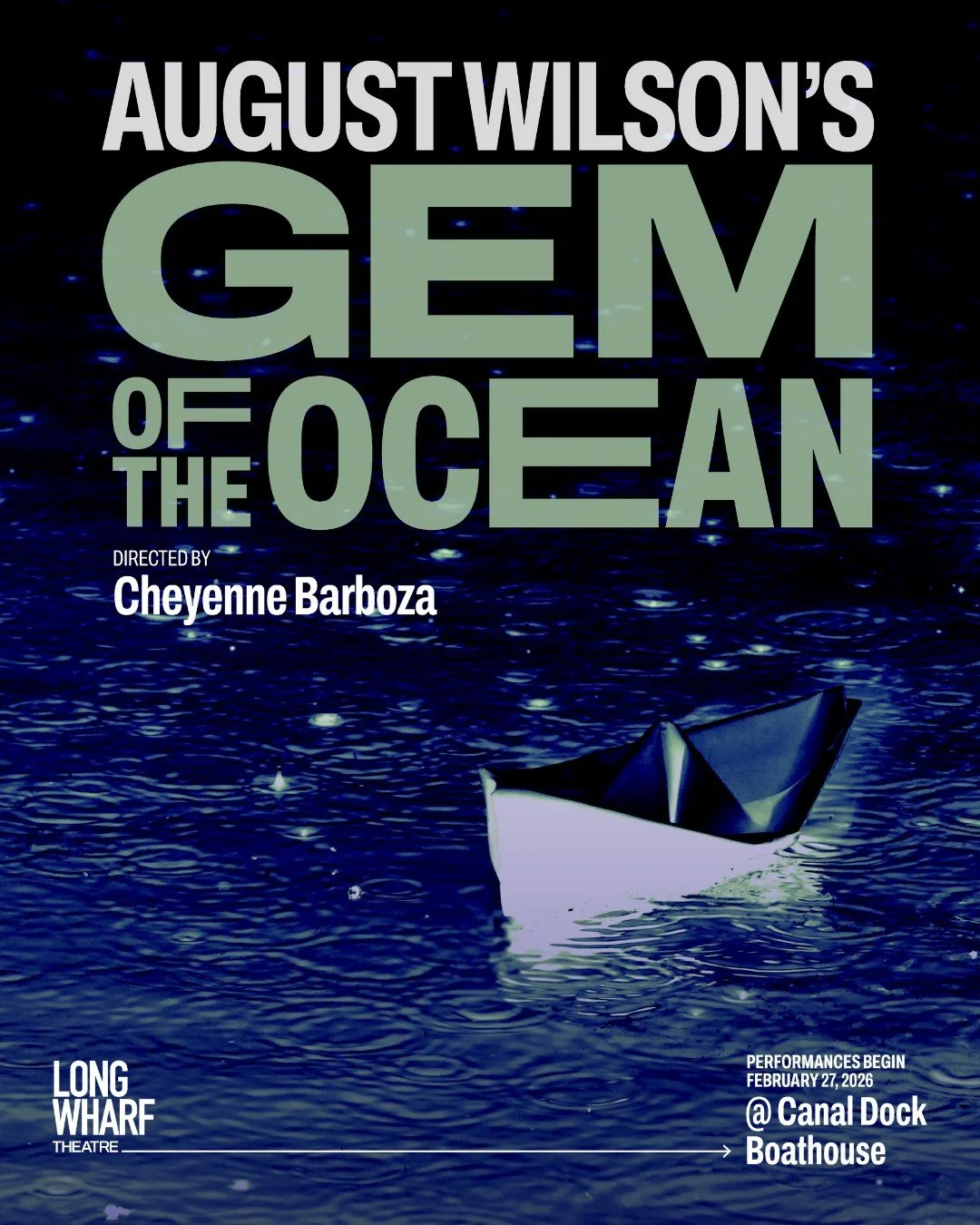
The current Long Wharf Theatre production, playing through March 15, is located at the Canal Dock Boathouse on Sargent Drive in New Haven. It's an usual setting as the view through the windows onto Long Island Sound creates a spaciousness around the stage that undermines the concentrated locus of the play, which, like most of Wilson's plays, takes place in one particularized space. Yet the openness of the staging, directed by Cheyenne Barboza, adds considerable energy to the production, with the boat sequence especially powerful.

The ensemble cast enacts the always exacting rhythmic dialogue flawlessly. All fully inhabit their roles, making Wilson's characters come alive as personalities with depth and complexity. As Selig, Mike Boland shows appealing humility and respect to Ester and genial humor toward the others; as Eli, a former member of the Underground Railroad that helped escaped slaves reach freedom, Thomas Silcott has an easygoing demeanor that alters significantly as he becomes fully engaged by the drama taking place; as Black Mary, Grace Porter shows great strength and purpose, and plays her reactive scenes—meeting Citizen's attempt to seduce her and tabling Ester's domestic criticisms and having it out with her brother—with wonderful self-possession; as Caesar, Bjorn DuPaty is almost a villain you love to hate, but his long speech about how he made something of himself impresses as it's meant to, giving Caesar if not soul, exactly, than at least a particular claim on his proper dignity; as newcomer Citizen, Matthew Elam is likeable, energetic, and full of a will to better himself that is necessary to the plot—he, of all the characters, is going into the future, but first must know the past; as Solly Two Kings, Terrence Riggins exudes strength and meaningful self-awareness; the more we learn about him the deeper and more enduring does his character become; as Ester, Denise Burse seems born to play the role, her presence penetrating and her voice a magic wand, conjuring the collective spirit this community needs in order to survive.
Gem of the Ocean is unique in Wilson's oeuvre because it is set at a time when its key elder figures—Ester, Solly, Eli—were born into slavery, while the younger generation have been born after Emancipation in 1865. Citizen was given his name to commemorate the fact that he was born as free citizen of the U.S. However, as Solly points out, that's a status that must be earned, is "heavy" to carry, and, as he probes further, questions what freedom is. The play, we might say, asks us to ruminate on that issue, while keeping in play questions about the rule of law, sanctuary spaces, the value of family, as kin, or as persons joined together for common purpose, the weight of the past, the spirit of ancestors, and what Ester calls "adventure," or the meaningful events and stories that accrue around persons as they live their lives.
As with all Wilson plays, there is much humor and entertainment in how the characters interact, their individual voices and mannerisms creating a social texture that is the hallmark of his theater. And in Gem there are moments of collective realization and of individual resilience and sacrifice. As Eli says, "It's a war and you always on the battlefield." Gem of the Ocean brings the struggle close to home and presents theater as a symbolic space in which to find new directions and ultimate identities.
Gem of the Ocean
By August Wilson
Directed by Cheyenne Barboza
Scenic Design: Omid Akbari; Costume Design: Travis Chinick, Toni-Leslie James; Lighting Design: Joseph X. Fonseca; Composer and Sound Design: Chris Felix; Hair & Wig Design: Matthew Armentrout; Movement Artist, Fight & Intimacy Director: Hanan Hameen; Production Stage Manager: Andrew Petrick-Knoll; Assistant Director: Steve Driffin; Casting Director: Erica A. Hart
Cast: Mike Boland; Denise Burse; Bjorn DuPaty; Matthew Elam; Grace Porter; Terrence Riggins; Thomas Silcott
Long Wharf Theatre
February 27-March 15, 2026