Review of Furlough's Paradise, Yale Repertory Theatre
A dramatic consideration of the fraught relations between two cousins, a. k. payne's Furlough's Paradise gives us access to the conversations between Mina and Sade (or De) as well as to the deeper, wordless fears and anxieties that prey on them. As directed by abigail jean-baptiste, at Yale Repertory Theatre through May 16, much of the show's theatrical power comes from choreographed enactments of emotional states it would be hard to put into words or describe accurately. The two actors in the show—Tiffany McLarty (Mina) and Lauren F. Walker (Sade)—provide a tour de force of the psychic states of these loving but somewhat estranged kin, as they try to find a footing for their continued kinship.
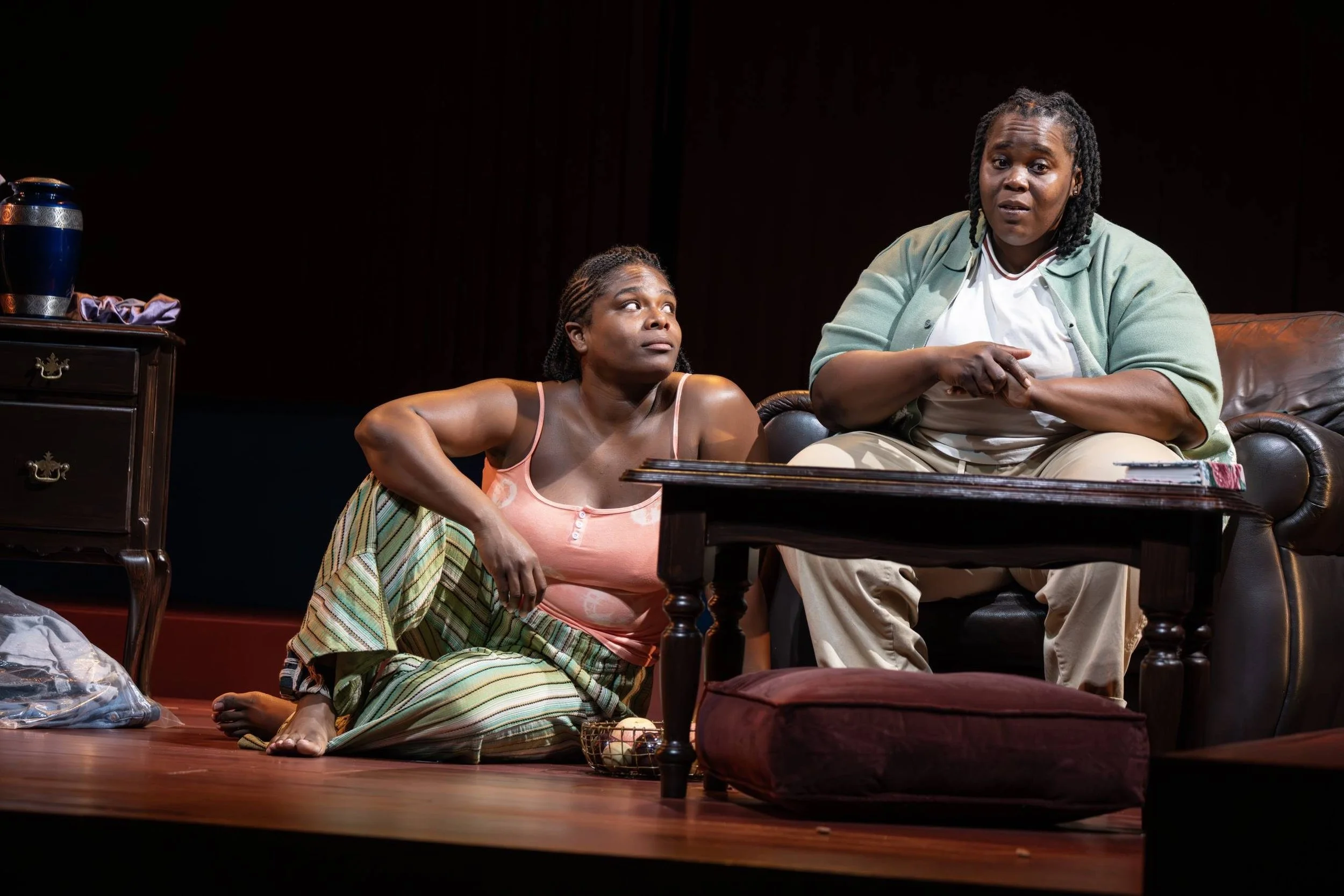
Sade (Lauren F. Walker), Mina (Tiffany McLarty) in Furlough’s Paradise, Yale Repertory Theatre; photo by Joan Marcus
The play throws a lot at us. Not only trying to suss the backgrounds of the two cousins—what they had in common, where they diverged—but also what their issues with one another are, in the present. When we meet them, after a striking mute sequence with the tone of a horror film, they have just returned from a funeral for Sade's mother, Mina's aunt. The immediate contention is the cremation that Mina ordered without consulting Sade, who was not available. Eventually, we learn that's because she is currently incarcerated upstate and what we're watching is the weekend furlough she was given in order to attend the funeral.
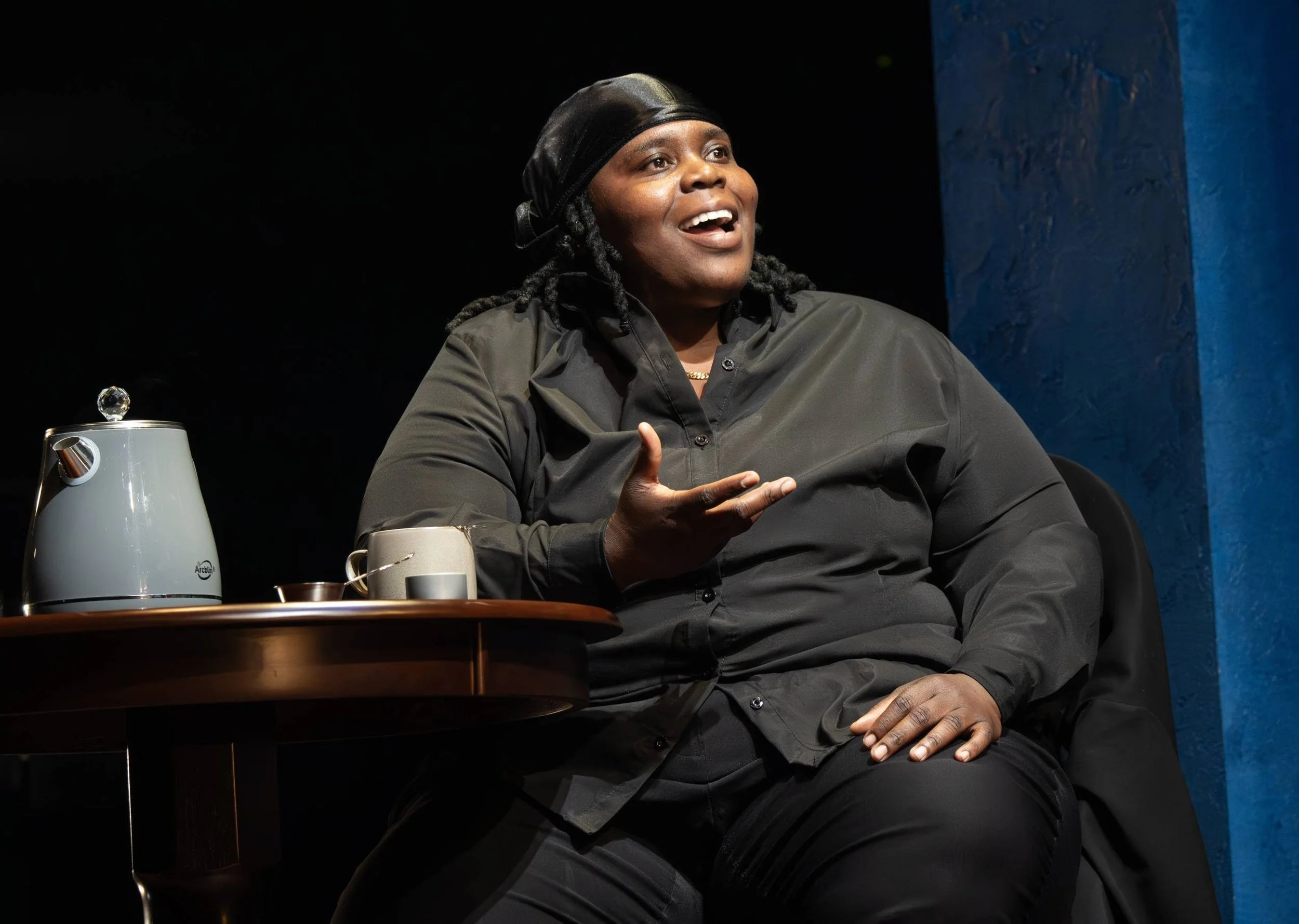
Mina (Tiffany McLarty) in Furlough’s Paradise, Yale Repertory Theatre; photo by Joan Marcus
There's a lot more, including: Sade giving birth at eighteen, before going to prison for an unspecified crime which, to Sade's mind, was a case of "an eye for an eye"; Mina getting an Ivy League degree and taking a job at google in LA and now having a girlfriend living in San Francisco; interspersed with details of the cousins bringing each other up to date are a flowing stream of judgmental comments, free associative recollections of childhood—often in the context of the TV shows they watched and Halloween costumes—with a constant undercurrent of how disappointing their lives seem, and how much injustice they’ve experienced as simply the way things are.
Which brings us to the main thematic concerns of Furlough's Paradise. Both Mina and Sade have hopes for the future and the way they share them and discuss them is the heart of the play. For Sade, a supportive group in prison has begun to fantasize a future utopia, conceived as place free from social stigmas, from being forced into racial or gendered roles. Lauren F. Walker conveys Sade's idealism with a nearly rapturous assertion of positive over negative forces. While, to bring her plan to fruition, it would help if she could walk on water, we almost believe she could, so powerful is her inner conviction. Mina, by contrast, is ostensibly more "realistic," but her situation with Gina, or g, seems, the more we learn, to thrive on a certain disjunct between how she imagines their relationship and how it actually works. There are good laughs in how Sade reacts to each new detail. The upshot is that Sade, while idealistic and often petulant, can be a soulful sounding-board.
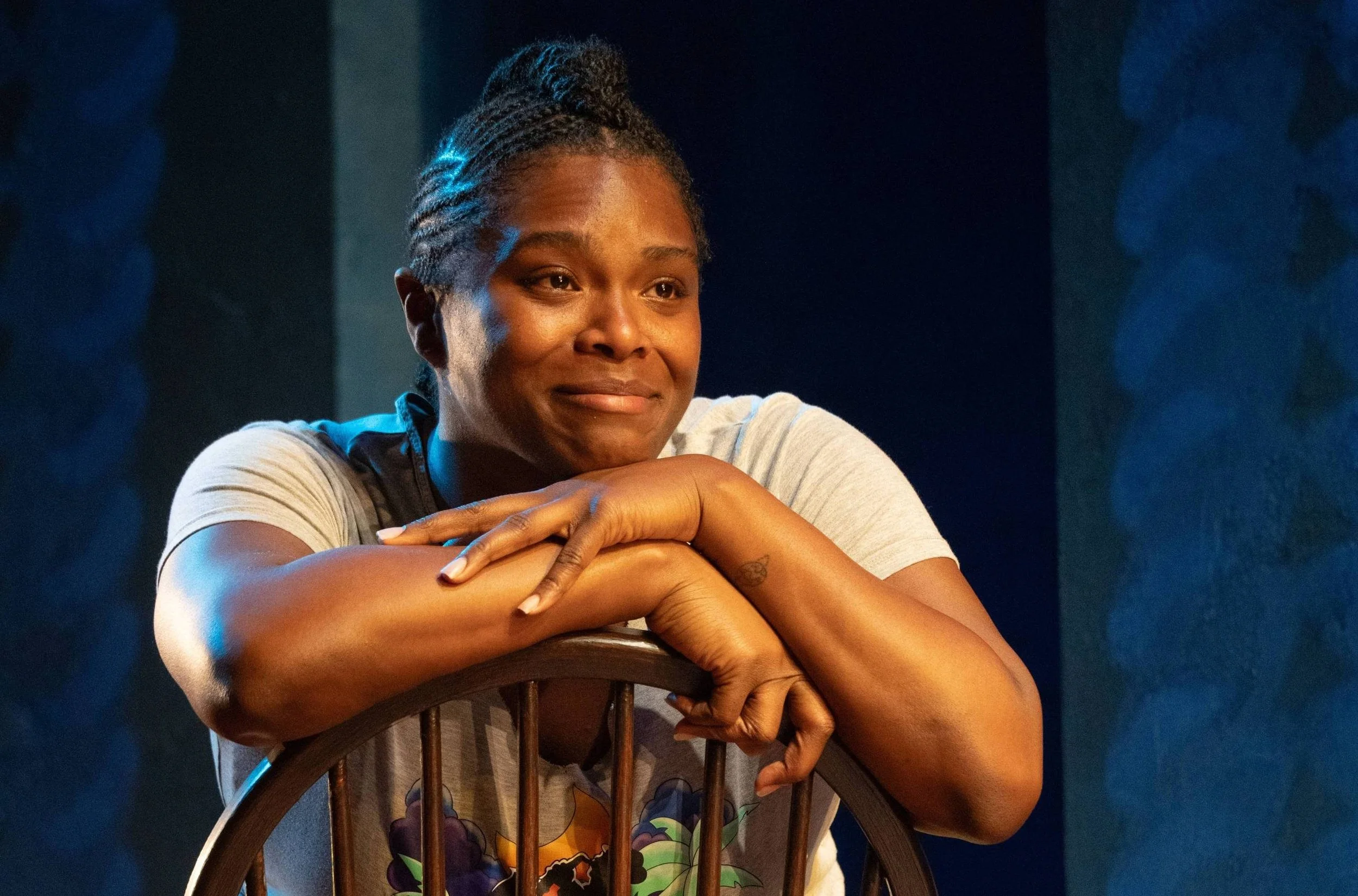
Sade (Lauren F. Walker) in Furlough’s Paradise, Yale Repertory Theatre; photo by Joan Marcus
That it seems, finally, is what these two uneasy spirits offer each other. Not simply a shared background that includes Uncle Edward blasting Louis Armstrong and reading his paper on his porch, like "y'all think you white," but a way of seeing each other as only kin can, as a different outcome that originated in similar circumstances, and as a work in progress that requires some idea of where it's been to understand where it's going. At one point the cousins remark on TV show plots that sent characters "back to nineteen fifty" so that "these black kids know themselves." What they know—what it means to be considered Black, the product of a certain history, with particular origins—is what they most want to question as they become mature adults.
As sometimes happens with Yale Repertory shows, the resources of the staging can almost overwhelm the play. There are busy projections, a sprawling set that never feels like an intimate space for the cousins, with a supposedly rickety bathroom that looks like an isolation chamber, and auditory clips—TV, music—that add specificity but inhibit the flow somewhat. At such moments we feel the pressure to believe in a particular, historical reality, as we would with characters naturalistically considered. But the more evocative aspects of the staging transport us into what feels like the inner imaginative worlds of Mina and Sade.
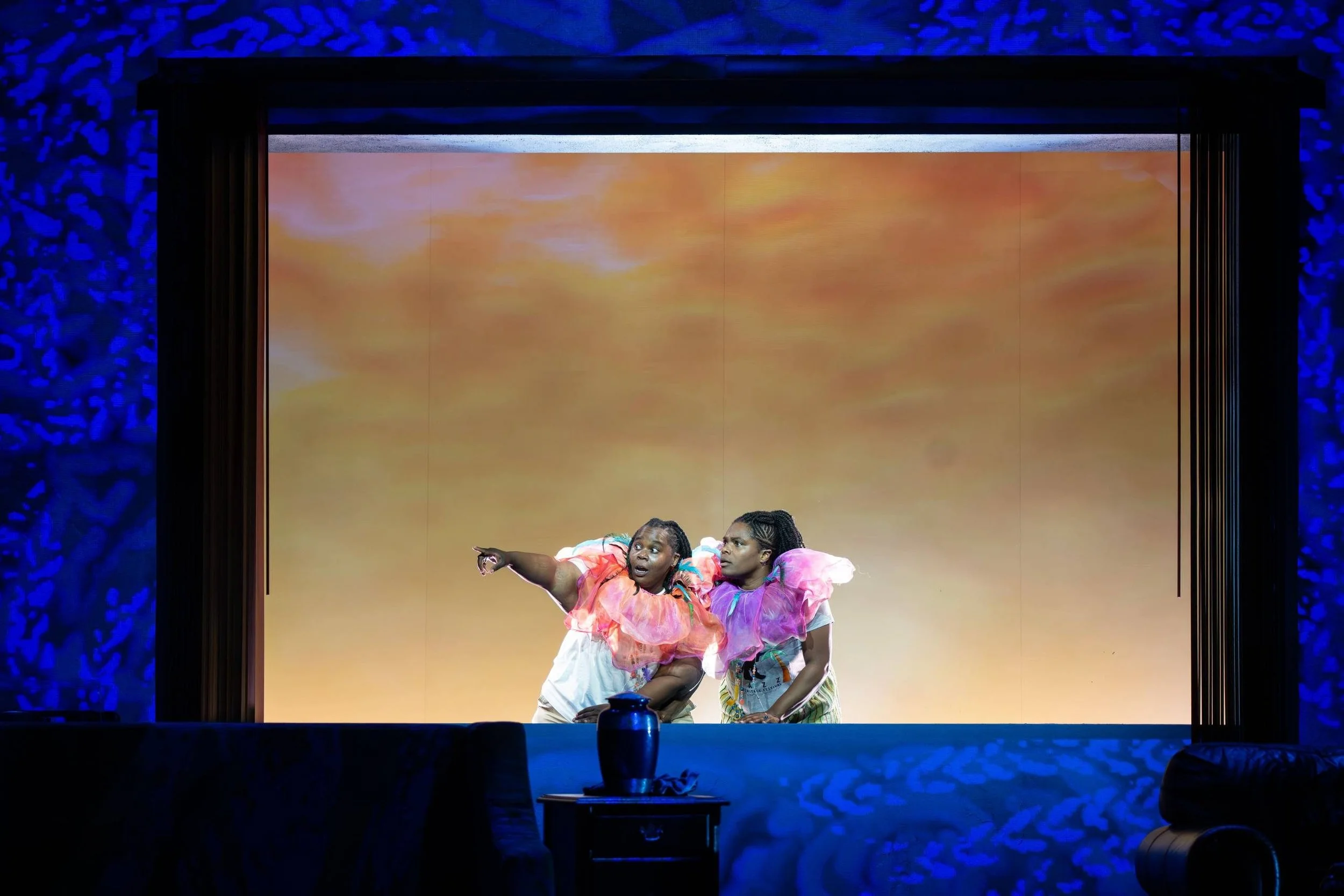
Mina (Tiffany McLarty), Sade (Lauren F. Walker) in Furlough’s Paradise, Yale Repertory Theatre; photo by Joan Marcus
The script works-in topical particularities—like Fresh Prince, or Sade's "Smooth Operator," or The Cheetah Girls, or google—that ground the cousins in a certain reality, but at times aims for something more like Ntozake Shange's for colored girls…, which gets mentioned a few times, rendering speech as a way of speaking poetry. This gives phrasing as much importance as any action we see taking place, and lets the set become a surrounding space rather than a lived-in interior.
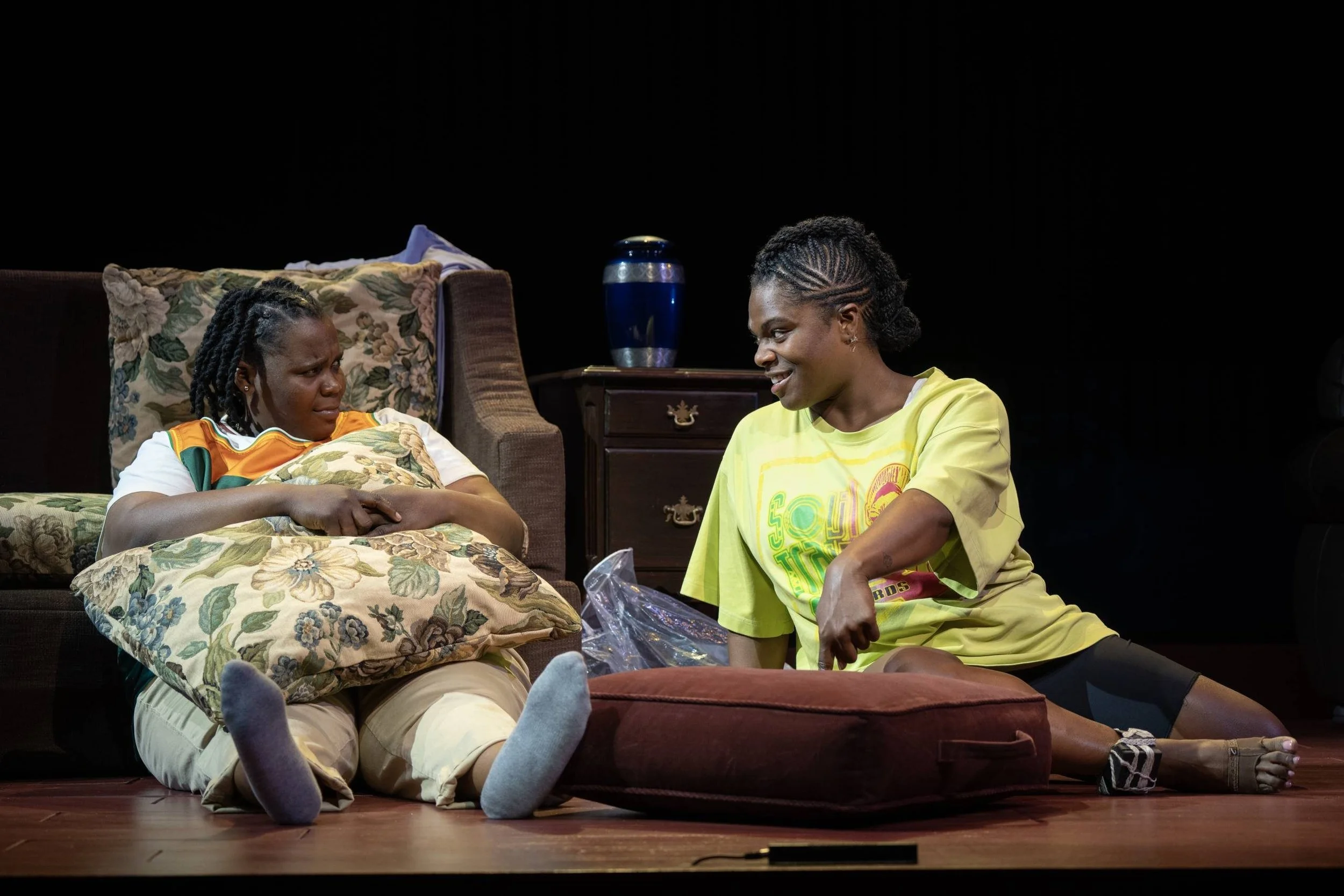
Mina (Tiffany McLarty), Sade (Lauren F. Walker) in Furlough’s Paradise, Yale Repertory Theatre; photo by Joan Marcus
The play is at its best when it pursues how these two persons make sense of their lives and work through their material memories with one another. Lauren F. Walker's performance is particularly sensitive to Sade's eloquent mood swings. Tiffany McLarty gives Mina a grounded sensibleness that works well against Sade's flights. Together, the imperative to find common ground becomes more emotionally involving as we grasp the stakes of what these two demand from life and expect from each other. Furlough's Paradise invites us to imagine a world very different from ours, even as it gives us entrance into the very real world Mina and Sade share.
Furlough's Paradise
By a. k. payne
Directed by abigail jean-baptiste
Scenic Designer: Anthony Robles; Costume Designer: Rea J. Brown; Lighting Designer: Alan C. Edwards; Original Music and Sound Design: Constant Dzah; Projection Designer: Wiktor Freifeld; Hair and Wig Designer: Nikiya Mathis; Choreographer: Ogemdi Ude; Production Dramaturg: Ashley M. Thomas; Technical Director: Shannon Dodson; Fight and Intimacy Director: Kelsey Rainwater; Vocal and Dialect Coach: Julie Foh; Casting Director: Calleri Jensen Davis; Stage Manager: ty ruwe
Cast: Tiffany McLarty, Lauren F. Walker
Yale Repertory Theatre
April 24-May 16, 2026